
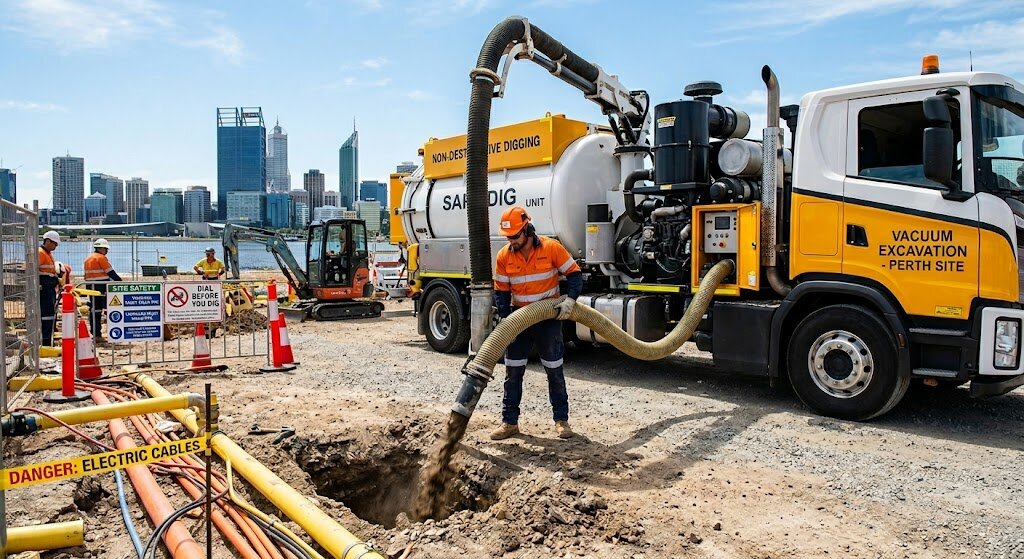
If you have driven past a roadwork site lately and seen a large truck with a thick hose snaking into a neat hole in the ground, you have seen a vacuum truck at work. These machines have quietly become one of the most important tools in modern excavation, drainage and industrial cleaning, and for good reason. They dig, clean and clear without the risk and mess of traditional mechanical methods.
But what exactly is a vacuum truck, how does it work, and why are there so many different types? Whether you are a property owner, a builder, a council engineer or simply curious, this guide explains everything in plain terms. We work with these trucks every day across Perth, so we will also show you where each type earns its keep.
What Is a Vacuum Truck?
A vacuum truck, sometimes called a vacuum excavator, vac truck or hydrovac, is a truck-mounted machine that uses powerful suction to remove material from the ground or from a tank, pit or pipe. That material might be soil, slurry, liquid waste, sludge, sand or debris.
At its simplest, a vacuum truck combines three things: a way to loosen or break up the material, a high-powered vacuum to suck it up, and a tank to store it until it can be disposed of or reused. The result is a machine that can dig a precise hole, clear a blocked drain, empty a flooded pit or clean out an industrial tank, all without a person ever needing to swing a pick or a digger bucket into the ground.
The big advantage is control. Because the material is loosened gently and drawn away through a hose, a vacuum truck can work safely around fragile and dangerous underground assets such as gas mains, power cables, water pipes and fibre-optic lines. This is why the method is known as non-destructive digging, or NDD.
How Does a Vacuum Truck Work?
Behind that simple idea sits some genuinely clever engineering. To understand how a vacuum truck works, it helps to know its main parts.
The Key Components
Every vacuum truck shares a handful of core systems. The vacuum source is the heart of the machine, usually either a positive displacement blower, which generates strong suction even at depth, or a fan system, which moves a very high volume of air for lighter material. The debris tank, also called the spoil tank, stores everything the truck draws up and can typically be tipped to offload the contents.
A water tank and high-pressure pump supply the water used to cut soil or jet a pipe clean, while air excavation units carry a compressor instead. A boom, which is an articulating arm, positions and supports the large suction hose, often 150 millimetres or more across, so the operator can direct it precisely. Finally, a series of cyclonic separators and filters strip fine particles out of the airflow so the blower is protected and the air leaving the truck is clean.
The Excavation Process Step by Step
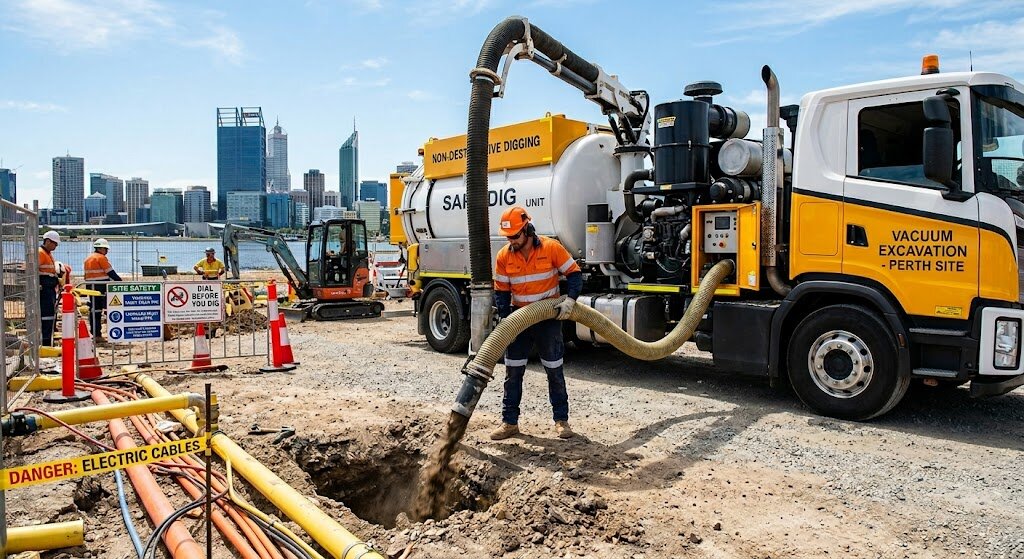
When a vacuum truck is used to dig, the process is straightforward and quick. First, the operator uses either pressurised water or compressed air through a lance to break up and loosen the soil at the dig site. As the soil turns to slurry, or in the case of air, loose dry spoil, the vacuum draws it up through the suction hose and into the debris tank.
The operator works steadily, exposing whatever lies below, whether that is a buried pipe, a cable or simply the bottom of a planned trench. Once the tank is full or the job is done, the spoil is transported away for disposal or, in the case of dry excavation, often reused as backfill.
The Main Types of Vacuum Trucks
Not all vacuum trucks are the same. The right machine depends on the material being removed and the conditions on site. Here are the main types you are likely to come across.
Hydro Excavation Trucks
Hydro excavation trucks, often called hydrovacs, use a jet of pressurised water to cut and liquefy the soil into a slurry, which the vacuum then removes. Water is highly effective at breaking up most soil types, including the compacted and clay-heavy ground found in parts of Perth, which makes hydro excavation the most common method for digging and potholing.
Air Excavation Trucks
Air excavation trucks use compressed air rather than water to break up the ground. The big benefit is that the spoil stays dry, so it can often be vacuumed up and then put straight back into the hole as backfill, with no slurry to cart away or dispose of. Dry excavation is ideal where keeping the soil reusable matters, and it is a popular choice for exposing sensitive utilities.
Combination Jet-Vac Trucks
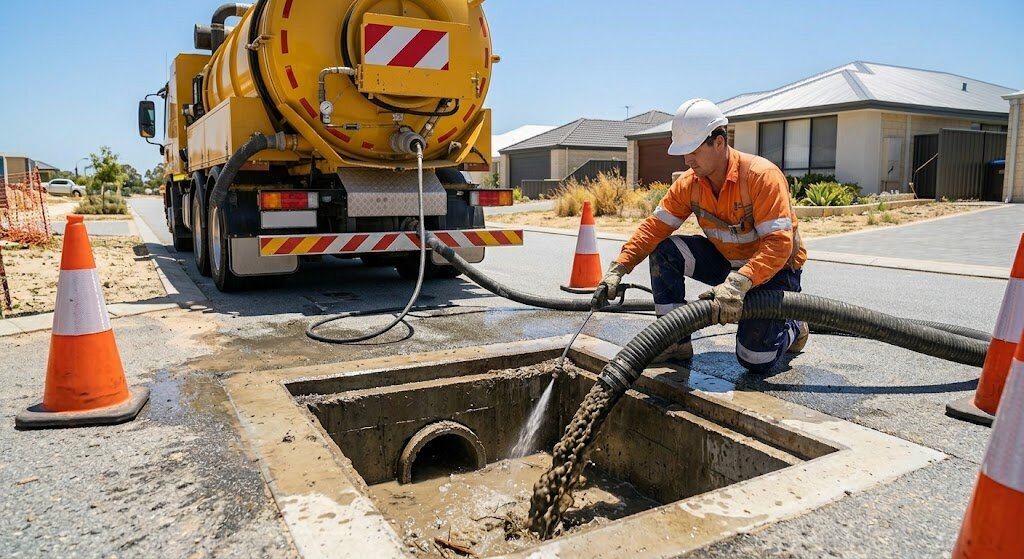
Combination trucks, also known as jet-vac units, pair a high-pressure water jetting system with vacuum recovery. The jet blasts grease, sediment, roots and blockages loose inside a pipe or pit, while the vacuum immediately draws the debris and dirty water away. These are the workhorses of drain, sewer and stormwater cleaning, because they clean and clear in a single pass.
Wet and Dry Vacuum and Industrial Loaders
At the heavier end sit wet and dry vacuum trucks and industrial vacuum loaders, built to handle large volumes of liquid, sludge or dry bulk material. These machines are used for industrial tank cleaning, liquid waste removal, spill recovery and clearing material that ordinary equipment simply cannot manage.
Vacuum Truck Types at a Glance
Each type suits a different job, and a capable fleet covers all of them.
| Type | How it works | Best suited to |
| Hydro excavation | Pressurised water cuts soil into slurry | Potholing, trenching and digging in most soils |
| Air excavation | Compressed air loosens dry spoil | Exposing utilities where dry, reusable backfill is wanted |
| Combination jet-vac | High-pressure jetting plus vacuum recovery | Drain, sewer, stormwater and pit cleaning |
| Wet and dry vacuum loader | Heavy-duty suction of liquids and solids | Industrial waste, slurry and large-volume removal |
What Are Vacuum Trucks Used For?
The flexibility of vacuum trucks means they turn up across a huge range of jobs. These are the ones we handle most often across Perth and wider Western Australia.
Non-destructive digging and utility exposure is the headline use. Before any construction or excavation, underground services need to be located and physically exposed, a process called potholing or daylighting. A vacuum truck does this safely, removing the soil around a cable or pipe without touching it.
Drain and sewer cleaning is another major application. Using combination jet-vac trucks, we clear blocked drains, scour grease and roots from sewer lines, and flush stormwater pipes back to full capacity. Stormwater pit and soakwell cleaning falls into the same category, clearing out the sand, silt and leaf litter that build up and cause flooding once heavy rain arrives.
Vacuum trucks also handle liquid and slurry waste removal, emptying pits, sumps, interceptors and tanks quickly and cleanly. We use them for garnet waste removal, recovering the spent abrasive garnet left behind by waterjet cutting and abrasive blasting, which can then be disposed of or recycled.
They are ideal for car wash bay and mud pit cleaning, where wash water, mud and sediment have to be captured and removed rather than washed into the stormwater system. And when the weather turns, the same trucks provide emergency flood response, pumping and vacuuming water away from properties and infrastructure fast.
Why Vacuum Excavation Is the Safer Way to Dig
The biggest reason vacuum trucks have taken over so many jobs is safety. Striking an underground service with a mechanical excavator can be catastrophic, causing gas explosions, electrocution, injuries, widespread service outages and very expensive repairs.
Vacuum excavation removes that risk. Because the soil is loosened gently and drawn away by suction, the operator can expose a live cable or a pressurised gas main without damaging it. This is exactly why utilities and regulators recommend it.
Western Power, for example, defines non-destructive digging as breaking up the ground with high-pressure air or water and removing it with a powerful vacuum unit, and lists potholing as a core step in safe excavation near its network.
It all starts with knowing what is underground in the first place. Before any digging, a free enquiry should be lodged with Before You Dig Australia, which provides plans showing the location of registered pipes and cables on site.
A vacuum truck then exposes those services precisely, confirming their exact position and depth before the main works begin. The combination of accurate plans and non-destructive digging is what keeps people, infrastructure and projects safe.
Beyond safety, vacuum excavation is precise, creates far less surface damage, and means less reinstatement afterwards. It is often faster than hand digging and far gentler on the surrounding ground than a mechanical bucket.
Why Choose iVac WA
When the job calls for a vacuum truck, the size and capability of the fleet behind it makes all the difference. Here is what we bring to every job:
- We are Perth’s leading vacuum excavation specialists, operating the largest and most advanced vacuum truck fleet in Western Australia.
- We carry out safe, efficient non-destructive digging that protects underground services and the people working around them.
- We handle the full range of work, from utility locating and exposure to drain and stormwater cleaning, garnet waste removal, car wash and mud pit cleaning, and emergency flood response.
- We capture and remove liquids, slurry and waste responsibly, rather than letting them run into the stormwater system.
- We support Western Australia’s mining, civil, commercial, industrial and residential sectors, with a focus on safety and a fast turnaround.
Because we run such a broad fleet, we can match the right truck to your job rather than forcing one machine to do everything.
|
Need a vacuum truck for your next project? Call iVac WA on (08) 6205 9986 or email info@ivacwa.com.au for safe, fast vacuum excavation and non-destructive digging across Perth. |
Frequently Asked Questions
What is the difference between hydro and air vacuum excavation?
Hydro excavation uses pressurised water to cut the soil into a slurry, which is then vacuumed up. Air excavation uses compressed air instead, keeping the spoil dry so it can often be reused as backfill. Water works well in most soils, while air is preferred where dry, reusable spoil is an advantage.
Is vacuum excavation safe around gas and power lines?
Yes, that is its main purpose. Because the soil is loosened gently and drawn away by suction rather than struck with a blade, a vacuum truck can expose live cables and pressurised pipes without damaging them. It is the method utilities and regulators recommend for working near underground assets.
What can a vacuum truck suck up?
A vacuum truck can remove soil, slurry, sand, sludge, liquid waste, sediment and many other materials. The exact capability depends on the type of truck and its suction system, which is why a varied fleet matters for handling different jobs.
Do I still need to contact Before You Dig?
Yes. Lodging a free Before You Dig Australia enquiry gives you plans showing where registered services are located. A vacuum truck then exposes those services precisely. The two work together, plans tell you roughly where to look, and non-destructive digging confirms the exact location safely.
Are vacuum trucks only for big construction sites?
No. While they are essential on major civil and mining projects, vacuum trucks are just as useful for residential and commercial work, such as clearing a blocked stormwater drain, cleaning soakwells, emptying a pit, or exposing a service before a small build.
Do you provide emergency vacuum truck services in Perth?
Yes. We provide fast call-outs across Perth and wider Western Australia, including emergency flood response and urgent drainage and liquid waste jobs that cannot wait.
Conclusion
Vacuum trucks have transformed the way we dig, clean and clear. By swapping a digging blade for powerful suction, they remove material precisely and safely, protecting the maze of pipes and cables buried beneath every Perth street. From hydro and air excavation to combination jet-vac and heavy industrial units, each type has its strengths, and the key is matching the right machine to the work in front of you.
Whether you need utilities exposed before a build, a stormwater system cleared before the rain, or liquid waste removed from a commercial site, a vacuum truck is almost always the safer, cleaner and smarter choice.
|
To discuss your project or arrange a free estimate for vacuum excavation in Perth, call iVac WA on (08) 6205 9986 or email info@ivacwa.com.au. |