
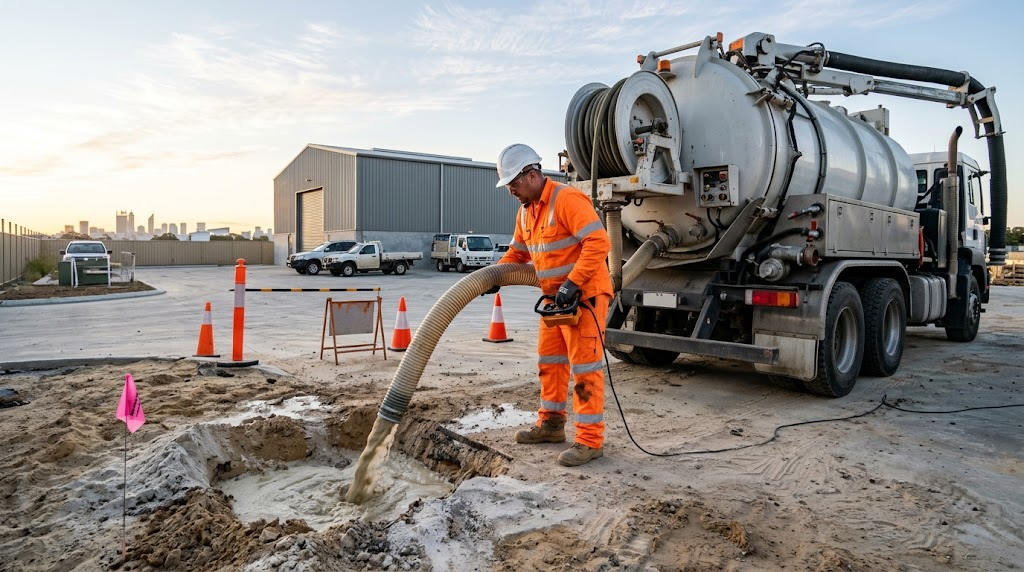
From the road, a vacuum truck looks like a big tank on wheels. On site, it is a precision tool, and the person running it decides whether a job goes smoothly or turns into a problem.
A vacuum truck operator controls a powerful suction system, works around live underground services and manages waste that has to be handled correctly, often all in the same shift.
If you are curious about the work, or you hire vacuum trucks and want to know what a skilled operator brings to your sites across Perth and Western Australia, this guide covers what the job involves, the skills and licences behind it, and why the operator matters as much as the equipment.
What Does a Vacuum Truck Operator Do?
A vacuum truck operator drives and runs a vacuum truck, which uses powerful suction to draw soil, water, sludge or other material into a sealed tank. On many jobs, water or air is used first to loosen the material, then the vacuum removes it.
The operator works the controls, guides the hose and lance, monitors the tank, and makes sure the job is done safely and the waste is dealt with properly.
A shift usually moves through a familiar set of tasks:
- Completing pre-start checks on the truck, hoses, pumps and safety equipment
- Travelling to site and attending any required induction or job briefing
- Confirming what is being removed, where the underground services are and how to access the work area
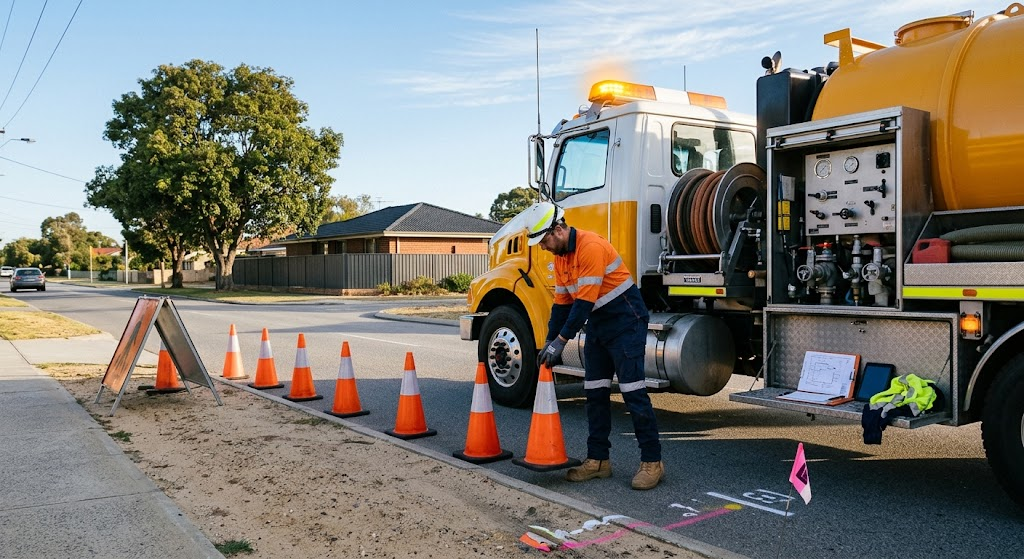
- Setting up the work zone, with traffic control where needed
- Running the hose and controls to excavate, clean or remove material
- Monitoring tank levels and the condition of the work area as the job progresses
- Transporting the waste to an appropriate disposal facility
- Completing records and leaving the site clean
The Kinds of Jobs an Operator Works On
No two days are quite the same, because vacuum trucks are used for a wide range of work. The table shows how the operator’s role changes from job to job.
| Job | What the operator does |
| Vacuum excavation and potholing | Uses water or air and suction to dig small, precise holes and expose buried services without damaging them |
| Underground utility locating and exposure | Carefully uncovers cables and pipes so their exact position and depth can be confirmed |
| Stormwater drain and soakwell cleaning | Removes silt, sand and debris from pits and pipes, often with jetting |
| Car wash and mud pit cleaning | Draws sludge and sediment out of pits so they keep working |
| Garnet waste removal | Collects spent blasting media, wet or dry, from blasting areas |
| Emergency flood response | Pumps and vacuums standing water away when heavy rain overwhelms a site |
Why Vacuum Excavation Calls for a Careful Operator
Digging near underground services is one of the highest-risk parts of any project, and it is where an operator’s judgement matters most. Plans show where services are meant to be, not exactly where they are.
The Water Corporation describes potholing using vacuum excavation as a way of locating buried pipes by careful digging of trial holes or other soft dig techniques, and notes that potholing remains the only way of determining pipeline location with certainty.
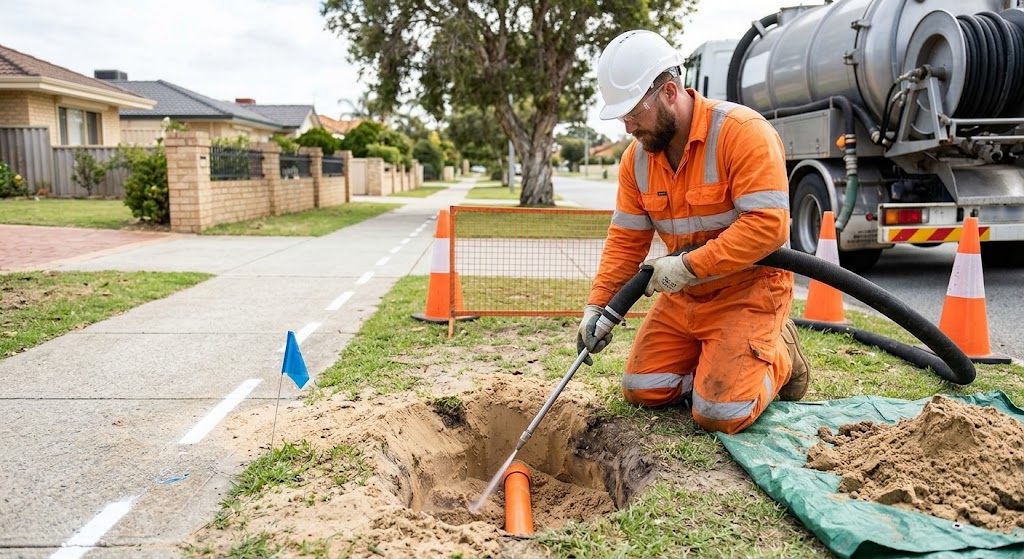
That puts the operator at the centre of the job. They control how much pressure is used, where the lance is pointed and how quickly material is removed, so a live cable or pipe is exposed and left intact. It takes steady hands, patience and a good feel for the ground.
Skills and Qualities of a Good Vacuum Truck Operator
The best operators combine practical skill with a careful, switched-on approach.
Attention to detail. Reading site plans, spotting services and noticing changes in the ground all depend on paying close attention.
Safety awareness. Operators work around live services, traffic, plant and pressurised equipment, so a safety-first habit is non-negotiable.
Mechanical sense. Understanding how pumps, hoses, blowers and valves behave helps an operator work efficiently and spot a problem early.
Communication. Operators liaise with site supervisors, traffic controllers and clients, and need to explain clearly what they are doing and what they have found.
Physical fitness and resilience. Handling hoses, working outdoors in heat or rain, and starting early are all part of the job.
Problem solving. Access can be tight, ground conditions vary and waste streams differ, so operators regularly adapt on the spot.
Licences, Tickets and Training
The exact requirements depend on the truck and the site, but a few things come up again and again.
Because vacuum trucks are heavy vehicles, many operators need a heavy vehicle licence. In Western Australia, the Department of Transport states that a Heavy Rigid (HR) licence allows you to drive a rigid vehicle with three or more axles and a gross vehicle mass over 8,000 kg, and that you generally need to have held a car licence for at least two years, or an LR or MR licence for at least one year, to apply. Which class is needed for a particular truck depends on its weight and configuration.
Construction sites usually require a construction induction card. WorkSafe WA explains that the general card stays valid while the holder remains within the construction industry, and becomes invalid after two consecutive years away from it.
On top of that, operators complete site-specific inductions, particularly for mining and industrial sites, and receive training in operating vacuum loading systems and working safely around underground services. There is no substitute for experience, and many operators build their skills by working alongside more experienced colleagues.
Safety on the Job
A vacuum truck is far safer than digging or cleaning by hand, but only when it is run properly.
Operators confirm the location of underground services before digging, starting with Before You Dig Australia plans and then physically exposing the service. Wherever possible, they run the hose from above pits and sumps rather than climbing in, and any entry into a confined space follows the site’s own safety procedures.
They manage traffic and set up the work zone so the public and other workers are protected, and wear the appropriate protective equipment for the job. And they handle waste according to what it is, which matters when material is contaminated or needs to go to a licensed facility.
What a Skilled Operator Means for Your Site
If you hire vacuum trucks, the operator is a big part of what you are paying for. A skilled operator means services are exposed without damage, drains are cleaned properly instead of partly cleared, and waste is removed and disposed of correctly. It also means a safer site, fewer delays and clear records of what was done.
When you are comparing vacuum truck providers in Perth, ask about the people as well as the fleet. Ask how operators are trained, what site inductions they hold and how they approach working near services.
Why Choose iVac WA
Good equipment needs good people behind it. Here is what we bring to every job:
- We operate the largest and most advanced vacuum truck fleet in Western Australia, run by operators who work to your site’s induction, access and safety requirements.
- We carry out vacuum excavation and non-destructive digging, underground utility locating and exposure, stormwater drain and soakwell cleaning, car wash and mud pit cleaning, garnet waste removal and jetting.
- We provide emergency flood response when heavy rain overwhelms a site.
- We remove waste in a way that keeps it contained and directs it to the right disposal pathway.
- We support Western Australia’s commercial, industrial, civil and mining sectors, with a focus on safe work and a fast turnaround.
| Need an experienced vacuum truck crew on your site? Call iVac WA on (08) 6205 9986 or email info@ivacwa.com.au for a free estimate. |
Frequently Asked Questions
What does a vacuum truck operator do?
They run a vacuum truck to excavate, clean or remove material using suction, often combined with water or air. They also check the equipment, work safely around underground services and traffic, and make sure the waste is handled and disposed of correctly.
Do you need a special licence to operate a vacuum truck?
It depends on the truck. Many vacuum trucks are heavy vehicles, so a heavy vehicle licence is often needed. In Western Australia, a Heavy Rigid licence covers rigid vehicles with three or more axles and a gross vehicle mass over 8,000 kg. Sites may also require a construction induction card and their own inductions.
Is being a vacuum truck operator physically demanding?
It can be. The work is largely outdoors, involves handling hoses and equipment, and often starts early. Good fitness and a safety-first approach help.
Do operators have to go into pits or drains?
Generally not. One of the main benefits of vacuum equipment is that the operator can run the hose from outside the pit, sump or excavation, rather than climbing in. Where entry is unavoidable, it is done under the site’s safety procedures.
What types of sites do vacuum truck operators work on?
Commercial and industrial sites, civil and construction projects, and mining sites, among others. The work ranges from precise vacuum excavation around services to cleaning drains, pits and sumps.
How do operators avoid damaging underground services?
They confirm the location of services using plans, then use water or air and suction to carefully expose them, rather than digging blind with a mechanical excavator. The service is exposed and left intact.
Conclusion
A vacuum truck operator does far more than drive a truck. They read the site, protect underground services, control a powerful system with a light touch, and make sure the waste ends up where it should. That mix of skill, safety awareness and judgement is why the operator matters as much as the equipment.
| To arrange a vacuum truck service in Perth, call iVac WA on (08) 6205 9986 or email info@ivacwa.com.au. |