
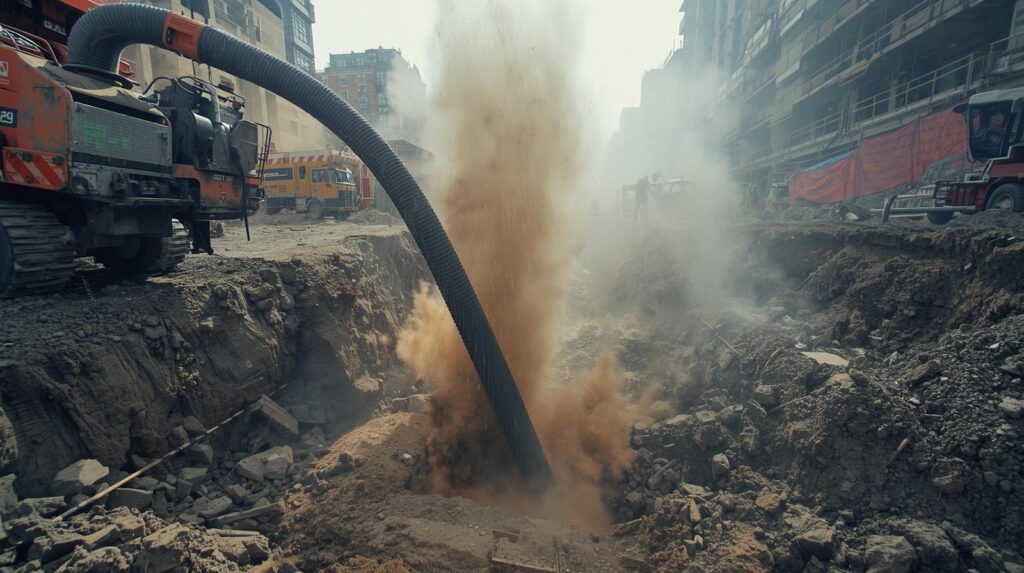
Telecommunications infrastructure is unforgiving. A single fibre optic cable, no thicker than a garden hose, can carry the internet, phone and data for thousands of homes and businesses. Nick it with an excavator bucket and the result is not a small repair, it is an outage that can take entire suburbs offline for a day or more, along with a repair bill that runs into tens of thousands of dollars.
That is exactly why vacuum excavation has become the standard method for digging on NBN and telecom projects across Western Australia. Instead of a blade cutting blindly through the ground, vacuum excavation removes soil with water or air and powerful suction, exposing cables and conduit precisely and without damaging them. For an industry where the assets are fragile, densely packed and business-critical, it is the only sensible way to dig.
Here is how vacuum excavation supports NBN and telecom work in WA, why it matters, and where it fits into a project from planning through to installation.
Why Telecom Projects Rely on Vacuum Excavation
The stakes on a telecom site are unusually high, and three factors make careful digging essential.
The first is how fragile the assets are. Fibre optic cables and their conduit are easily crushed, cut or stretched, and even minor contact can degrade a connection. The second is congestion. Telecom cables rarely run alone, they share tight underground corridors with power, gas, water and other comms, so exposing one service means working safely around several others. The third is the sheer cost of getting it wrong.
The scale of the network shows why. The nbn network is the largest infrastructure project in Australia’s history, and more than 12 million homes and businesses can now connect to it. According to Before You Dig Australia, more than 1,200 incidents of damage to nbn infrastructure were reported in 2023 alone, causing costly repairs and widespread service interruptions. Even a small cut can leave a whole region without the internet, disrupting businesses, schools, hospitals and households.
Vacuum excavation removes that risk. Because the soil is loosened gently and drawn away by suction rather than struck, an operator can uncover a live fibre cable or a bank of conduit and leave it completely intact.
What Is Vacuum Excavation?
Vacuum excavation, also called non-destructive digging or NDD, uses a truck-mounted system to break up and remove soil without a mechanical digging blade. There are two main methods. Hydro excavation uses a jet of pressurised water to cut the soil into a slurry, while air excavation uses compressed air to loosen it and keep the spoil dry so it can often be reused as backfill. In both cases, a high-powered vacuum then draws the loosened material up through a hose into a debris tank.
The advantage for telecom work is control and safety. The method exposes buried services precisely, without the impact, vibration or blind force of an excavator, which is why utilities and asset owners across the country ask for it when their assets are involved.
How Vacuum Excavation Is Used on NBN and Telecom Projects
Vacuum excavation is not limited to one task. It supports telecom work from the first site investigation right through to installation.
Locating and Exposing Existing Services
Before any new work begins, crews need to know exactly what is already in the ground. A Before You Dig Australia enquiry provides plans showing registered services, including nbn assets, but those plans are a guide, not a precise map. This is where potholing comes in.
Vacuum excavation digs small, targeted holes to physically expose and confirm the exact position and depth of existing cables and conduit, a process often called daylighting. Lodging a free Before You Dig Australia request is the essential first step, and vacuum excavation is what turns those plans into verified, visible reality on site.
Exposing Fibre and Conduit Without Damage
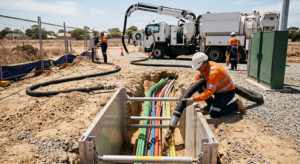
When an existing comms line has to be worked around, joined or relocated, it must be uncovered without a scratch. Vacuum excavation is ideal for exposing green nbn fibre, copper cables and conduit banks intact, so cablers can carry out their work on assets that are undamaged and clearly visible.
Digging Pits, Pillars and Joint Bays
Telecom networks need pits, pillars, joint bays and hauling points at regular intervals. Vacuum excavation digs these neatly and to precise dimensions, even in congested areas where a mechanical digger could not safely operate, and with far less surface damage to reinstate afterwards.
Supporting Directional Drilling and Trenching
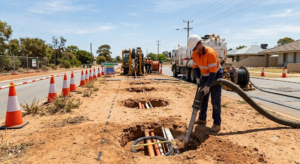
Much telecom conduit is installed by horizontal directional drilling, which bores a path underground beneath roads, driveways and landscaping. Before the drill runs, vacuum excavation potholes along the bore path expose any crossing services, so the drill head can be guided safely past them. It is also used to expose the entry and exit points of a bore, and to open the narrow trenches used for conduit and micro-trenching, without endangering nearby assets.
Cleaning and Clearing Conduit and Pits
Existing pits and conduit often fill with silt, sand and debris over time, which blocks cable hauling. Vacuum equipment clears them out quickly and cleanly, ready for new cable to be pulled through.
Vacuum Excavation vs Traditional Digging on Telecom Sites
On a telecom project, the difference between methods is not just convenience, it is risk.
|
Factor |
Vacuum Excavation | Traditional Mechanical Digging |
| Risk to fibre and conduit | Minimal, assets exposed intact | High, blades can cut or crush cables |
| Working in congested corridors | Safe and precise | Difficult and hazardous |
| Surface disruption | Small, targeted holes | Wide trenches and heavy reinstatement |
| Spoil handling | Contained in the debris tank | Loose spoil around the site |
| Suitability near live services | The recommended method |
Generally unsafe |
Safety, Compliance and Duty of Care
Working near underground services in Western Australia carries clear legal and safety responsibilities, and vacuum excavation is central to meeting them.
The process starts with locating. A free Before You Dig Australia enquiry notifies asset owners, who supply plans of their infrastructure. From there, the recognised safe-digging steps apply: plan the job, pothole to expose services, protect the exposed assets, and only then proceed.
Western Power sets out this approach for work near its network, describing non-destructive digging as breaking up the ground with high-pressure air or water and removing it with a powerful vacuum, and listing potholing as a core safe-excavation step. The same discipline protects telecom assets, which frequently share those corridors with power.
There is also a duty of care. Telecom asset owners such as nbn and Telstra require that only authorised people work on their infrastructure, and that excavators take reasonable steps to avoid damage. Vacuum excavation is how a responsible contractor demonstrates that care, exposing services without harming them and keeping a project compliant, safe and on schedule.
How Vacuum Excavation Saves Time and Money
Beyond safety, vacuum excavation makes commercial sense on telecom projects.
Avoiding a strike is the biggest saving of all. A damaged fibre line means emergency repairs, potential fines, a stalled project and, often, an unhappy client and community. Vacuum excavation removes that exposure.
It is also precise, so there is far less surface to reinstate than with a wide open trench, and it works in tight, congested spots where a mechanical plant would be slow, risky or simply unable to fit. Air excavation adds further efficiency by keeping the spoil dry and reusable as backfill, cutting disposal costs.
For civil contractors, telecom carriers and network builders, that combination of safety and efficiency keeps projects moving and budgets under control.
Why Choose iVac WA
Telecom projects demand precision, reliability and a fleet that can keep up. Here is what we bring to every job:
- We are Perth’s leading vacuum excavation specialists, operating the largest and most advanced vacuum truck fleet in Western Australia.
- We carry out safe, non-destructive digging that exposes fibre, conduit and other services intact, protecting both the network and the people working around it.
- We handle utility locating and exposure, potholing, pit and trench excavation, and conduit clearing, supporting telecom projects from investigation through to installation.
- We use both hydro and air excavation, so we can match the method to the site and the soil.
- We support Western Australia’s civil, telecommunications, mining, commercial and industrial sectors, with a focus on safety and a fast turnaround.
Because we run such a large and varied fleet, we can meet the schedule and the site conditions of any telecom project, large or small.
| Planning an NBN or telecom project in WA? Call iVac WA on (08) 6205 9986 or email info@ivacwa.com.au for safe, precise vacuum excavation across Perth and wider Western Australia. |
Frequently Asked Questions
Why is vacuum excavation used instead of a digger on telecom projects?
Because fibre optic cables and conduit are fragile and easily damaged, and a strike can cause a major outage. Vacuum excavation removes soil with water or air and suction rather than a blade, so it exposes those assets precisely without cutting or crushing them.
Can vacuum excavation expose fibre optic cables without damaging them?
Yes. That is one of its main uses. The soil is loosened gently and drawn away by suction, so a cable or conduit can be uncovered and left completely intact, ready for cablers to work on.
Do I still need Before You Dig plans if I am using vacuum excavation?
Yes. A Before You Dig Australia enquiry provides plans showing where registered services, including nbn assets, are located. Vacuum excavation then physically confirms their exact position on site. The two work together, plans tell you roughly where to look, and potholing confirms it safely.
What is the difference between hydro and air excavation for telecom work?
Hydro excavation uses pressurised water to cut the soil, while air excavation uses compressed air and keeps the spoil dry so it can be reused as backfill. Both are non-destructive and safe around fibre and conduit, and the right choice depends on the site and soil conditions.
Does vacuum excavation help with directional drilling?
Yes. Before a horizontal directional drill runs, vacuum excavation potholes along the bore path expose crossing services, so the drill can be guided safely past them. It is also used to open bore entry and exit points.
Do you work with civil contractors and telecom carriers in WA?
Yes. We support civil contractors, telecommunications carriers and network builders across Perth and wider Western Australia, providing the vacuum excavation that keeps telecom projects safe and on schedule.
Conclusion
On an NBN or telecom project, the ground is full of fragile, business-critical infrastructure, and one careless dig can take a community offline. Vacuum excavation is the method built for exactly this challenge, exposing and installing cables and conduit with precision, protecting the network, and keeping projects safe, compliant and on time. From locating and potholing to pit excavation and directional drilling support, it is the smart way to dig where the margin for error is zero.
Whether you are building new telecom infrastructure, maintaining an existing network, or exposing services before construction, the right vacuum excavation partner makes all the difference.
| To discuss your project or arrange a free estimate for vacuum excavation in Perth, call iVac WA on (08) 6205 9986 or email info@ivacwa.com.au. |