
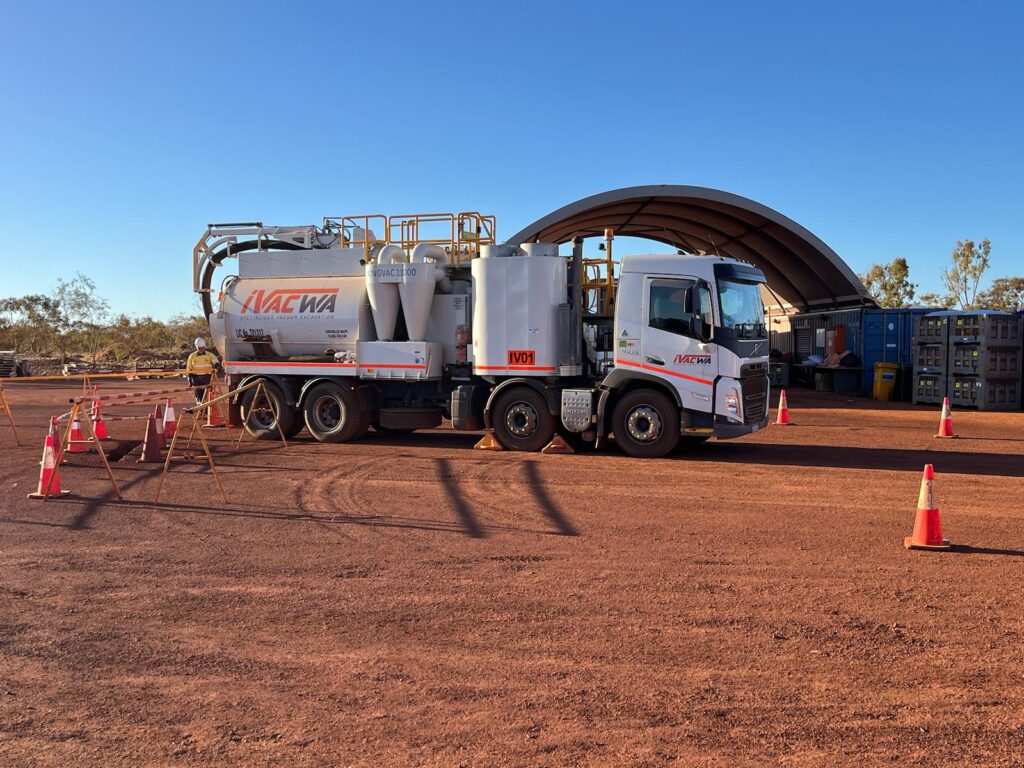
Every time a trench is dug in Perth, there is a hidden risk beneath the surface. Gas mains, power cables, water pipes and fibre optic lines all run underground, often bundled tightly together and not always exactly where the plans say.
Strike one with an excavator bucket and the consequences can be severe, from a dangerous gas leak or electrocution to a costly service outage and a stalled project.
Vacuum digging removes that risk. Instead of cutting into the ground with a mechanical blade, it loosens the soil gently and draws it away with powerful suction, so buried services can be uncovered without being touched.
It is faster, cleaner and, above all, far safer than traditional digging. Here is what vacuum digging is, how it works, and why it has become the smart way to dig in Perth.
What Is Vacuum Digging?
Vacuum digging, also known as vacuum excavation or non-destructive digging (NDD), is a method of removing soil without a digging blade.
A truck-mounted system uses either pressurised water or compressed air to break up the ground, and a high-powered vacuum then draws the loosened material up through a hose and into a debris tank on the truck.
The two methods suit different jobs. Hydro excavation uses a jet of water to cut the soil into a slurry, which works well in most of Perth’s soil types. Air excavation uses compressed air, which keeps the spoil dry so it can often be reused as backfill.
In both cases, the key point is the same, the soil is removed by suction rather than by force, which is what makes the method so safe and precise.
How Vacuum Digging Works
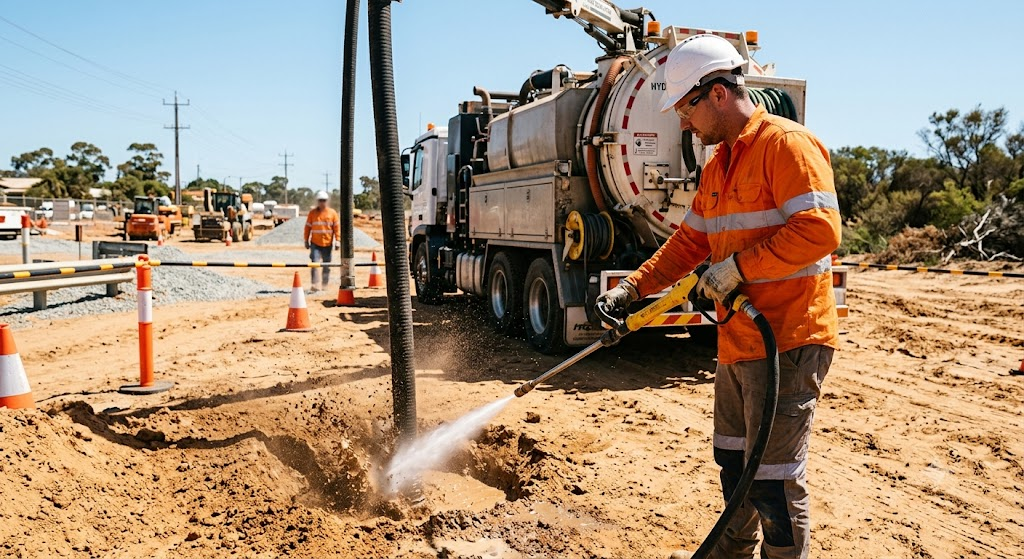
The process is straightforward. The operator directs a lance into the dig site, using water or air to loosen the soil. As the ground breaks up, the vacuum hose draws the spoil away and stores it in the debris tank.
The operator works steadily, exposing whatever lies below, whether that is a buried cable, a pipe, or simply the bottom of a planned excavation.
Because the operator has full control over where the water or air is directed, the dig is precise and the surrounding ground stays largely undisturbed.
Why Vacuum Digging Is Safer
Safety is the reason vacuum digging has replaced mechanical excavation on so many jobs. It is safer on several fronts at once.
It Protects Underground Services
This is the biggest benefit. A mechanical excavator cannot see what it is digging into, so it can slice through a gas main or a power cable without warning.
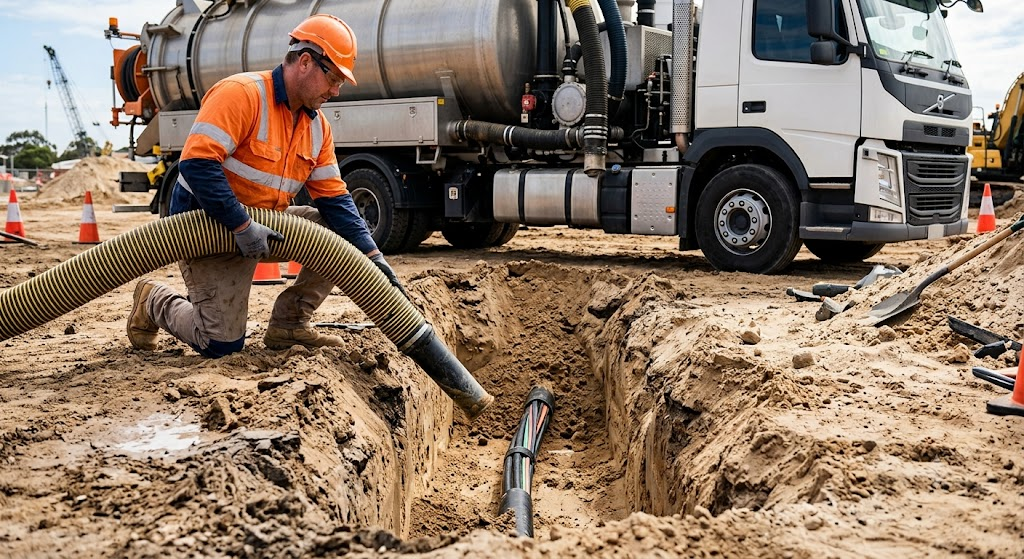
Vacuum digging loosens the soil gently and draws it away, so an operator can expose a live service and leave it completely intact. That prevents the gas leaks, electrocution risks, outages and expensive repairs that come with a strike.
It Keeps Workers Safer
Traditional excavation often puts people close to heavy machinery, open trenches and unseen hazards. Vacuum digging reduces that exposure. There is no swinging bucket near buried power, and far less need for workers to dig by hand around dangerous services. The operator controls the dig from a safe position, which lowers the risk of injury.
It Is Precise and Controlled
Because the soil is removed a little at a time under the operator’s control, vacuum digging produces neat, accurate holes exactly where they are needed. That precision matters when exposing a service in a congested corridor, or digging close to structures where a mechanical excavator would be too blunt an instrument.
It Causes Less Damage
With a small, targeted dig rather than a wide trench, vacuum digging leaves far less surface to reinstate. Driveways, paving, landscaping and roads are disturbed as little as possible, which saves time and money on making good afterwards.
Why It Matters in Perth
Vacuum digging is especially well suited to conditions here in Perth and wider Western Australia.
The metropolitan area is growing quickly, and its underground service corridors are increasingly congested with power, gas, water, sewer and telecommunications assets, often running close together. That density makes safe, precise digging essential.
Perth’s sandy soils also lend themselves to hydro excavation, which cuts through them cleanly and efficiently.
Just as important, safe digging is backed by clear rules. Before any excavation, a free enquiry should be lodged with Before You Dig Australia, which provides plans showing where registered underground services are located.
Those plans are a guide, not a precise map, so the services still need to be physically exposed. Western Power sets out this approach for work near its network, describing non-destructive digging as breaking up the ground with high-pressure air or water and removing it with a powerful vacuum, and listing potholing as a core step in digging safely. Vacuum digging is how that best practice is put into action on site.
Vacuum Digging vs Traditional Excavation
The difference between the two methods is clearest when you set them side by side.
| Factor | Vacuum Digging | Traditional Excavation |
| Risk to underground services | Minimal, services exposed intact | High, a blade can strike or cut them |
| Worker safety | Operator works from a safe position | People close to plant and open trenches |
| Precision | Neat, targeted holes | Wide, less precise trenches |
| Surface damage | Small, easy to reinstate | Extensive, costly to make good |
| Suitability near live services | The recommended method | Often unsafe |
What Vacuum Digging Is Used For
The safety and precision of vacuum digging make it useful across a wide range of jobs. It is used to locate and expose underground services before construction, a process called potholing or daylighting.
It digs holes for posts, poles, pits and footings without endangering nearby assets, and opens trenches for cables and conduit. It supports directional drilling by exposing crossing services along the bore path, and it works in tight or sensitive spots where a mechanical excavator cannot safely operate.
From civil and telecommunications projects to mining, industrial and commercial sites, it is the method of choice wherever there is something valuable in the ground.
Why Choose iVac WA
When a job calls for safe, precise digging, the fleet and experience behind it matter. Here is what we bring to every job:
- We are Perth’s leading vacuum excavation specialists, operating the largest and most advanced vacuum truck fleet in Western Australia.
- We carry out safe, non-destructive digging that protects underground services and the people working around them.
- We use both hydro and air excavation, so we can match the method to the site and the soil.
- We handle utility locating and exposure, potholing, trenching and pit excavation, along with drainage cleaning and emergency flood response.
- We support Western Australia’s civil, telecommunications, mining, commercial and industrial sectors, with a focus on safety and a fast turnaround.
Because we run such a large and varied fleet, we can meet the schedule and the site conditions of any job, large or small.
| Need safe, precise digging on your next project? Call iVac WA on (08) 6205 9986 or email info@ivacwa.com.au for vacuum digging across Perth and wider Western Australia. |
Frequently Asked Questions
What is the difference between vacuum digging and normal excavation?
Vacuum digging removes soil with water or air and powerful suction, rather than with a mechanical digging blade. This lets it expose buried services without cutting or crushing them, which is why it is so much safer than a conventional excavator around underground assets.
Is vacuum digging safe around gas and power?
Yes, that is its main purpose. Because the soil is loosened gently and drawn away by suction, an operator can expose a live gas main or power cable and leave it completely intact. It is the method utilities and regulators recommend for working near underground services.
What is the difference between hydro and air vacuum digging?
Hydro digging uses pressurised water to cut the soil, while air digging uses compressed air and keeps the spoil dry so it can be reused as backfill. Water suits most of Perth’s soils, and air is chosen where dry, reusable spoil is an advantage.
Do I still need Before You Dig plans if I use vacuum digging?
Yes. A Before You Dig Australia enquiry provides plans showing where registered services are located, and vacuum digging then confirms their exact position on site. The two work together, plans tell you roughly where to look, and vacuum digging exposes the services safely.
Is vacuum digging only for large projects?
No. While it is essential on major civil, mining and telecommunications projects, it is just as useful for smaller jobs, such as exposing a service before a build, digging post holes near cables, or clearing around existing pipework.
Do you offer vacuum digging across Perth?
Yes. We provide vacuum digging and non-destructive excavation across Perth and wider Western Australia, with a large fleet and a fast turnaround.
Conclusion
Digging near underground services is one of the riskiest parts of any project, and a single strike can be dangerous and costly. Vacuum digging takes that risk out of the equation, removing soil with suction rather than force so that services are exposed intact, workers stay safer, and the surrounding ground is barely disturbed.
In a growing, service-dense city like Perth, that combination of safety and precision is exactly what modern excavation calls for.
Whether you are exposing utilities before construction, digging in a congested corridor, or working close to sensitive assets, vacuum digging is the safe, smart way to break ground.
| To discuss your project or arrange a free estimate for vacuum digging in Perth, call iVac WA on (08) 6205 9986 or email info@ivacwa.com.au. |