Any property that houses animals in numbers, a farm, a saleyard, a kennel, a feedlot or a veterinary facility, eventually has to deal with liquid animal waste. Effluent, wash-down water and manure slurry build up in holding pens, wash bays, pits and yards, and it cannot simply be hosed into a drain or left to soak away.
Liquid animal waste disposal in Perth is a regulated activity, and getting it wrong risks fines, pollution and damage to the property itself.
This guide explains what liquid animal waste is, why it needs careful handling, the rules that apply in Western Australia, and how it is safely and compliantly removed.
What Is Liquid Animal Waste?
Liquid animal waste covers any effluent, slurry or wastewater generated by keeping or handling animals. It includes manure and urine mixed with wash-down water, effluent from washing yards, pens and holding areas, run-off and pit waste from feedlots, poultry sheds and dairies, and wastewater from kennels, catteries, veterinary clinics and animal transport depots.
Unlike solid manure, which can often be composted or spread on land under the right conditions, liquid animal waste behaves like other wastewater. It carries a heavy organic and nutrient load, and if it is not captured and disposed of properly it can pollute soil, groundwater and waterways.
Why Liquid Animal Waste Cannot Just Be Hosed Away
It is tempting to simply hose down a pen or a wash bay and let the water run off. In Perth, that is exactly what should not happen.
Liquid animal waste carries high levels of nutrients, organic matter and often pathogens. Left to run into a stormwater drain, it flows untreated into local waterways and wetlands, and allowed onto the ground in the wrong place it can contaminate soil and groundwater.
Because of this, liquid animal waste is treated as a form of trade waste or contaminated wastewater, not something that can be discharged without approval.
How Liquid Animal Waste Is Regulated in Western Australia
Understanding the rules explains why liquid animal waste disposal has to be handled carefully.
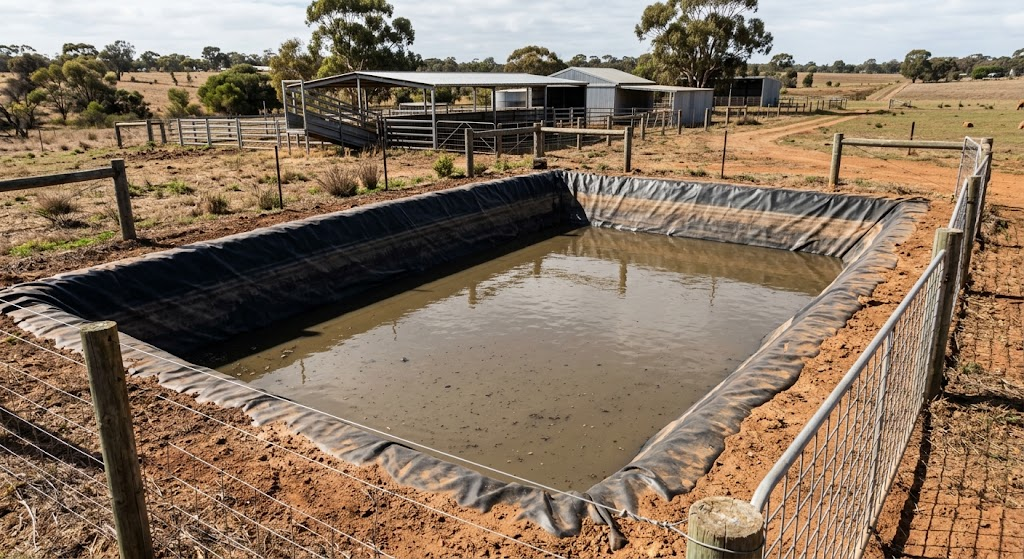
Larger animal-keeping operations, such as intensive piggeries, are regulated by the Department of Water and Environmental Regulation under the Environmental Protection Act 1986. Depending on their scale, these operations need a works approval, registration or a licence, and their effluent must be contained, typically in drains and ponds, to protect surface water and groundwater.
If liquid animal waste is to be discharged to the sewer, it counts as trade waste, and Western Australian law requires prior approval. The Water Corporation issues trade waste permits for businesses wanting to discharge non-domestic wastewater to its sewers, assessing each application to make sure the waste is compatible with the system and does not put the network, its workers or the treatment process at risk.
Where liquid animal waste cannot go to the sewer, it has to be collected and taken to an appropriate disposal or treatment facility instead. In short, from a small kennel to a large feedlot, liquid animal waste always has to go somewhere approved, never simply onto the ground or into a drain.
How Liquid Animal Waste Is Safely Removed
Removing liquid animal waste properly comes down to containing it and getting it to the right place, without any spillage along the way.
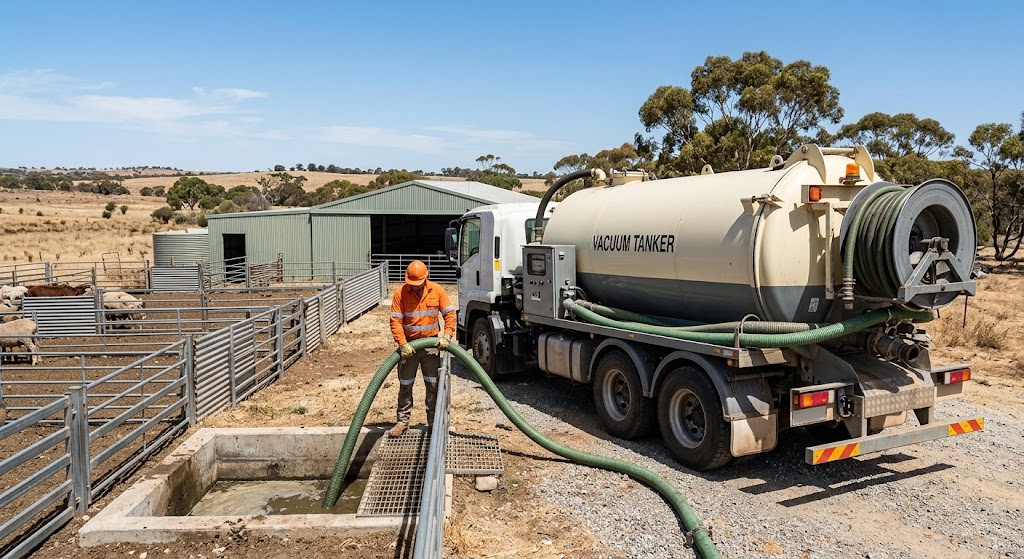
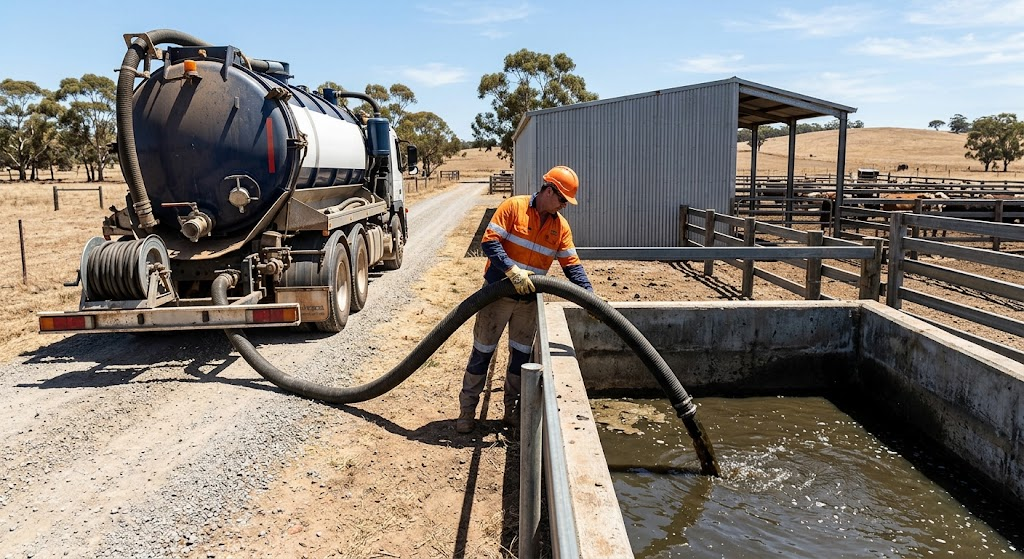
The waste is first assessed, so the volume and the appropriate disposal route, whether that is a licensed facility or a sewer connection under a trade waste permit, can be confirmed. It is then captured directly from pits, ponds, sumps, wash bays and holding pens using vacuum equipment, which draws the waste into a sealed tank rather than pumping or hosing it across the ground.
This matters because vacuum extraction keeps the waste fully contained from the moment it leaves the pit to the moment it reaches its destination, avoiding any spillage or seepage into surrounding soil.
Vacuum equipment is particularly well suited to this kind of waste. It can handle thick manure slurry as easily as diluted wash-down water, drawing both into the same sealed tank without the operator needing to touch or wade into the material.
For a property with several pits, pens or wash bays, a vacuum truck can also work through them in sequence in a single visit, rather than requiring separate handling for each source.
Once collected, the waste is transported to an approved disposal point, whether that is a treatment facility or, where a trade waste permit is in place, the sewer system under the agreed conditions. Regular removal also matters for the property itself.
Left too long, pits and ponds overflow, wash bays back up, and odour and pest problems follow, so scheduled collection keeps a facility compliant and functioning.
Sources of Liquid Animal Waste and How They Are Handled
Different facilities generate different waste, and the right removal approach depends on the source.
| Source | Typical waste | How it is handled |
| Farms and feedlots | Manure slurry, yard run-off, pit effluent | Vacuum collection from pits and ponds, transport to disposal |
| Poultry and dairy operations | Wash-down water, effluent | Vacuum collection, transport to disposal or licensed facility |
| Saleyards and holding pens | Manure and urine mixed with water | Regular vacuum collection to prevent overflow |
| Kennels, catteries and vet clinics | Wash-down and cleaning wastewater | Vacuum collection or trade waste discharge under permit |
| Animal transport depots | Wash bay and cleaning effluent | Vacuum collection from wash bay pits |
The Cost of Getting It Wrong
Ignoring liquid animal waste, or trying to manage it with a hose and a drain, tends to cost more in the long run than handling it properly from the start.
Pollution is the biggest risk. Because liquid animal waste is high in nutrients and organic matter, an uncontrolled discharge into a drain or onto the ground can contaminate soil, groundwater and nearby waterways, and in Western Australia that is a breach of environmental law.
For regulated operations such as intensive piggeries, mismanaging effluent can also put a works approval, registration or licence at risk. Beyond the regulatory side, there is a practical cost too, an overflowing pit or pond means a mess to clean up, odour that affects staff, customers or neighbours, and pests attracted to standing waste.
Scheduled, compliant collection avoids all of this, and it is almost always cheaper than dealing with an overflow, a fine or a damaged approval after the fact.
Why Choose iVac WA
Liquid animal waste needs to be captured cleanly and taken to the right place, and that is exactly what we deliver. Here is what we bring to every job:
- We are Perth’s leading vacuum excavation and liquid waste specialists, operating the largest and most advanced vacuum truck fleet in Western Australia.
- We safely collect liquid animal waste, effluent and wash-down water from pits, ponds, sumps and holding pens, and transport it for approved disposal.
- We extract waste cleanly with no spillage, protecting the surrounding soil, drains and waterways.
- We provide car wash bay and mud pit cleaning, along with stormwater cleaning and emergency flood response, for rural and agricultural sites.
- We support Western Australia’s agricultural, mining, industrial and commercial sectors, with a focus on safe work and a fast turnaround.
Because we run a large, dedicated vacuum fleet, we can handle regular scheduled collections or one-off clean-outs, whatever a property needs.
| Need liquid animal waste collected and removed from your property? Call iVac WA on (08) 6205 9986 or email info@ivacwa.com.au to arrange safe disposal across Perth. |
Frequently Asked Questions
Can liquid animal waste be hosed into a drain?
No. Liquid animal waste carries a heavy organic and nutrient load, and stormwater drains flow untreated into waterways, so hosing it away is both a pollution risk and against the rules. It must be captured and disposed of at an approved facility, or discharged to sewer only under an approved trade waste permit.
Do I need approval to discharge liquid animal waste to the sewer?
Yes. Any business wanting to discharge trade waste, including liquid animal waste, to the Water Corporation’s sewer system needs a trade waste permit, and the application is assessed to confirm the waste is compatible with the network before approval is given.
How is liquid animal waste collected?
It is captured with vacuum equipment directly from pits, ponds, sumps, wash bays and holding pens, drawing it into a sealed tank rather than pumping or hosing it across the ground. This keeps the waste fully contained during collection.
How often should liquid animal waste be removed?
It depends on the volume a property generates. Busy farms, feedlots and saleyards often need a regular collection schedule to prevent pits and ponds overflowing, while smaller operations such as kennels or vet clinics may only need occasional collection. We can help set a schedule that suits your site.
What happens if liquid animal waste is not managed properly?
Overflowing pits and ponds, odour and pest problems, and pollution of soil, groundwater or waterways can all follow. For regulated operations, non-compliance can also mean breaching licence or approval conditions.
Do you service rural and agricultural properties across WA?
Yes. We provide liquid waste collection and vacuum services across Perth and wider Western Australia, including rural and agricultural sites.
Conclusion
Liquid animal waste is a fact of life on any property that keeps or handles animals, but it is not something that can be left to run off or hosed away. Containing it properly, whether in pits, ponds or bunded areas, and having it collected and disposed of through an approved route protects the environment, keeps a facility compliant, and prevents the overflow and odour problems that come with leaving it too long.
Whether it is a farm, a feedlot, a saleyard or a veterinary clinic, regular, properly managed removal is the simplest way to stay on top of it.
| To arrange liquid animal waste collection and disposal in Perth, call iVac WA on (08) 6205 9986 or email info@ivacwa.com.au. |