Industrial and commercial sites in Perth generate waste streams that cannot go down a drain or into a general skip bin. Contaminated wash water, spent abrasive blasting media, hydrocarbon-laden sludge and other hazardous residues need to be identified, contained and removed by people who understand what they are dealing with. Get it wrong, and the result is a site contamination issue, a regulatory breach, or both.
We use our vacuum truck fleet to safely collect and transport hazardous industrial waste across Perth, from mine sites and workshops to commercial and civil projects, without anyone having to handle it directly.
Here is what counts as industrial hazardous waste, why it needs specialist handling, and how we remove it safely and compliantly.
What Counts as Industrial Hazardous Waste?
Hazardous waste on a work site is rarely one single thing. It usually falls into a handful of categories, each with its own handling requirements.
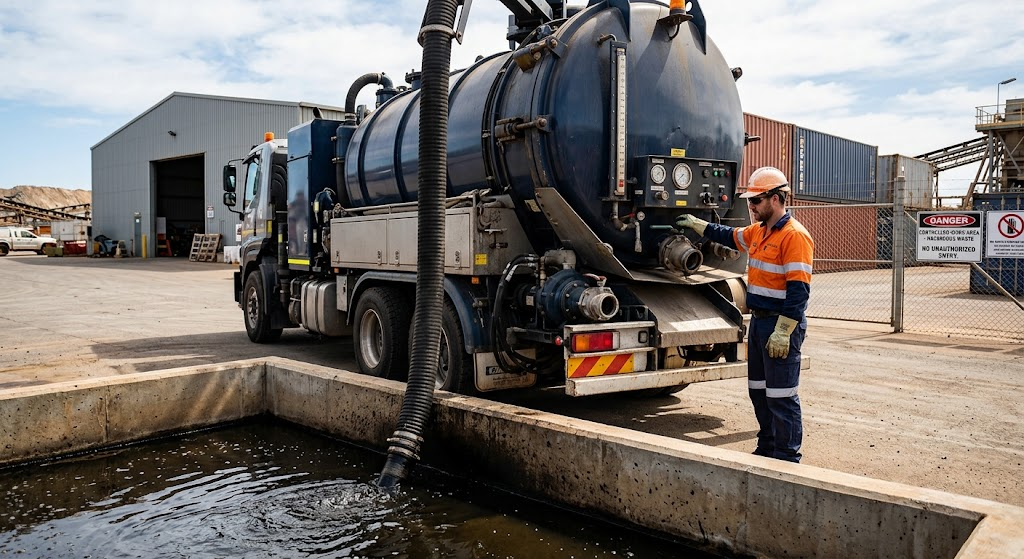
Contaminated liquids are one of the most common, including hydrocarbon-laden wash water from car wash bays and mud pits, oily water from workshops, and chemical residues from industrial processes.
Spent abrasive blasting media, commonly garnet, is another, since it picks up heavy metals, paint residue and coatings from whatever surface was being blasted, which changes how it needs to be handled and disposed of. Contaminated soil and spoil generated during vacuum excavation on a site with a known or suspected contamination history also needs careful management rather than being treated as general fill.
The Western Australian Government maintains a controlled waste category list that sets out which waste types require this kind of specialist handling and tracking, and it is worth checking against if you are unsure what you are generating on site.
Why Hazardous Waste Cannot Be Treated as General Waste
Hazardous waste is regulated the way it is because the risk does not disappear just because the waste is out of sight.
Tipping contaminated liquid into a drain, gully or general waste bin risks it entering the sewer or stormwater system, where it can contaminate waterways or damage infrastructure never designed to handle it. Under the Environmental Protection Act 1986, discharging waste in a way that causes pollution is an offence in Western Australia, and the consequences fall on whoever generated and released it, not just whoever moved it.
There is a practical risk too. Mixing incompatible wastes, or storing them without proper containment, can create reactions, fumes or spills that put workers and the surrounding site at risk. Specialist removal exists to take that risk out of the equation.
How We Remove Hazardous Waste Safely
Every job starts with identifying exactly what is being removed, because the waste type determines the equipment, the containment and where it can legally go.
We Assess the Waste Stream
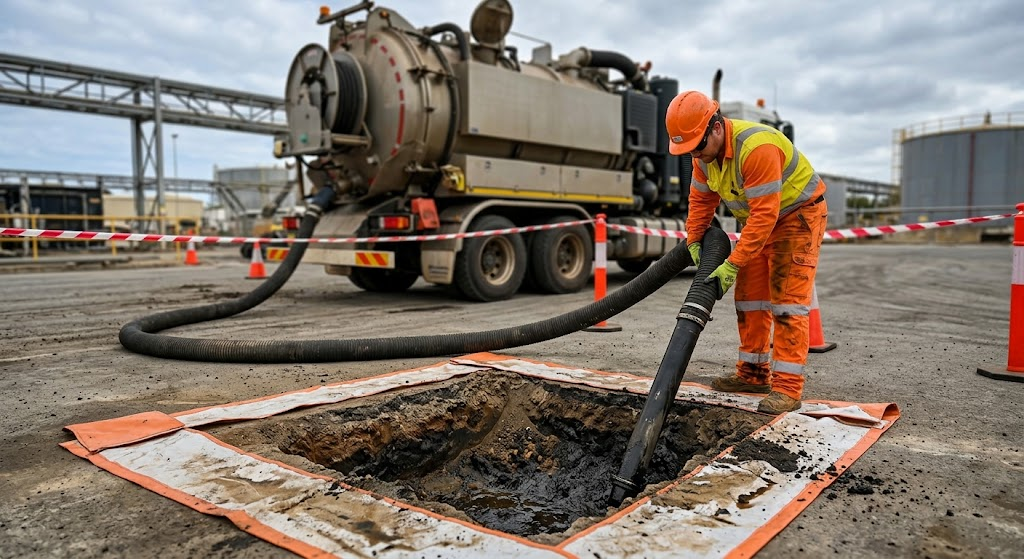
Before any collection starts, we confirm what we are dealing with, whether that is contaminated wash water, spent blasting media, oily sludge or contaminated spoil. This determines the right vacuum equipment, containment and eventual disposal pathway.
We Collect It With Vacuum Recovery
Vacuum excavation and vacuum recovery are well suited to hazardous waste because the material is drawn directly into a sealed tank rather than being shovelled, poured or otherwise handled by hand.
This keeps contact with the waste to a minimum and stops it spreading further across the site during collection. It applies equally to liquid waste from a wash bay or mud pit, garnet waste from a blasting enclosure, and contaminated spoil exposed during non-destructive digging.
We Contain and Transport It Compliantly
Once collected, hazardous waste is contained in the vacuum truck’s sealed tank for transport, keeping it separated from other waste streams and away from drains, stormwater and soil. We transport it to a facility licensed to accept that particular waste type, since different hazardous waste categories need to go to different licensed disposal or treatment points.
We Leave a Clear Record
Because hazardous waste movements need to be tracked, we keep clear records of what was collected, in what quantity, and where it went. That record matters if a site is ever audited, and it is good practice regardless.
Where Industrial Hazardous Waste Comes From
Hazardous waste turns up across a wide range of industrial and commercial activity in Perth, and each source needs a slightly different approach.
| Source | Typical waste | How we remove it |
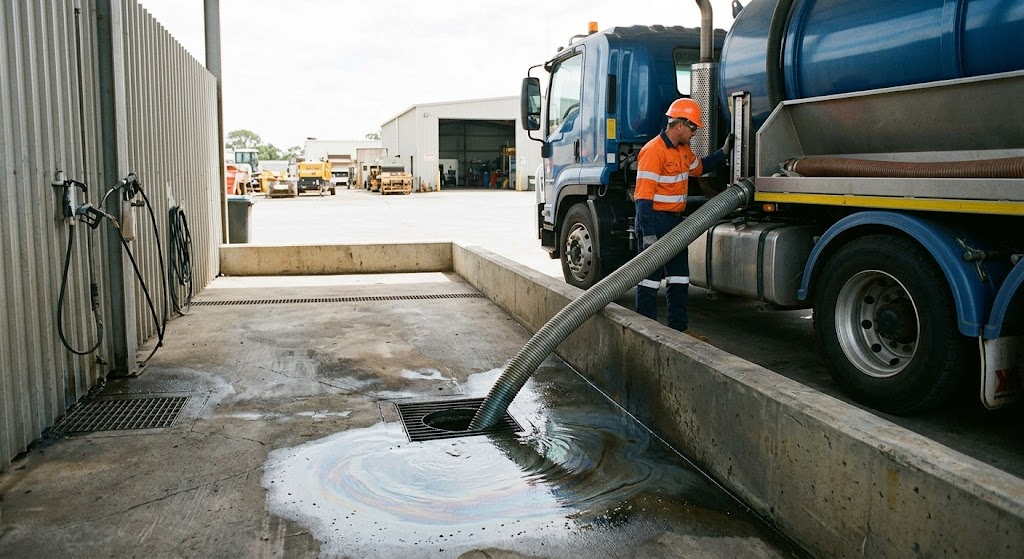
| Vehicle and mobile plant wash bays | Hydrocarbon-laden wash water, oily sludge | Vacuum recovery of pit contents |
| Abrasive blasting enclosures | Spent garnet media with paint or coating residue | Wet or dry vacuum collection |
| Workshops and maintenance bays | Oily water, chemical residue | Vacuum removal from bunded areas |
| Vacuum excavation on contaminated sites | Contaminated soil and spoil | Direct vacuum collection during digging |
| Mine sites and processing plants | Process water, sludge, industrial residues | High-capacity vacuum trucks |
Why This Matters on Mining and Industrial Sites
Mining, industrial and civil sites tend to generate hazardous waste in larger volumes and on tighter schedules than a typical commercial property, which makes reliable removal even more important.
A blasting or maintenance program that cannot get spent media or contaminated liquid removed quickly risks stalling site operations. A wash bay that is not cleared regularly starts backing up, which affects everything that relies on it. We work with the mining, industrial, civil and commercial sectors across Western Australia, and we size the response to the volume involved, whether that is a single wash bay pit or a larger program of scheduled collections across a site.
Why Choose iVac WA
Handling hazardous waste properly takes the right equipment and a careful approach. Here is what we bring to every job:
- We operate the largest and most advanced vacuum truck fleet in Western Australia, giving us the capacity for both routine collections and larger volumes.
- We collect contaminated liquids, spent garnet media and contaminated spoil using vacuum recovery, minimising direct handling and the risk of spreading contamination further.
- We transport hazardous waste to facilities licensed to accept it, keeping different waste streams properly separated.
- We keep clear records of what is collected and where it goes, supporting your site’s compliance requirements.
- We support Western Australia’s mining, industrial, civil and commercial sectors, with a focus on safe work and a fast turnaround.
| Generating hazardous waste on your site and need it removed safely? Call iVac WA on (08) 6205 9986 or email info@ivacwa.com.au to arrange a collection. |
Frequently Asked Questions
What is classed as industrial hazardous waste?
It covers a range of materials, including contaminated wash water, oily sludge, spent abrasive blasting media such as garnet, and contaminated soil or spoil. Western Australia’s controlled waste category list sets out the specific waste types that require specialist handling and tracking.
Can hazardous liquid waste go down a normal drain?
No. Hazardous liquid waste should never be discharged into a sewer, stormwater drain or gully. Doing so risks contaminating the wastewater or drainage network and is an offence under the Environmental Protection Act 1986 if it causes pollution.
How is garnet blasting waste removed?
Spent garnet picks up paint, coating and metal residue from whatever was being blasted, which changes how it needs to be handled. We use wet or dry vacuum collection to remove it from the blasting enclosure and transport it for appropriate disposal.
Do you treat or dispose of the hazardous waste yourselves?
We collect and transport hazardous waste using our vacuum truck fleet and deliver it to facilities licensed to accept that particular waste type. Treatment and final disposal are carried out at the licensed facility itself.
Is vacuum removal safer than manual handling?
Yes. Drawing waste directly into a sealed tank keeps contact with the material to a minimum and reduces the risk of spills or exposure compared with shovelling or manually decanting it, which is why vacuum recovery is the preferred method for hazardous waste on most sites.
Do you service mine sites as well as commercial properties?
Yes. We work across the mining, industrial, civil and commercial sectors in Western Australia, and we scale our response from a single wash bay collection to larger, scheduled programs on bigger sites.
Conclusion
Hazardous waste on an industrial or commercial site, whether it is contaminated wash water, spent blasting media or contaminated spoil, needs specialist collection, containment and transport, not a general waste bin or a drain. Vacuum recovery keeps the material contained from the point of collection through to a licensed facility, with a clear record of what was removed and where it went.
If your site is generating hazardous waste and you need it removed safely and compliantly, the right first step is a call to arrange collection before it becomes a bigger problem.
| To arrange hazardous waste removal in Perth, call iVac WA on (08) 6205 9986 or email info@ivacwa.com.au. |