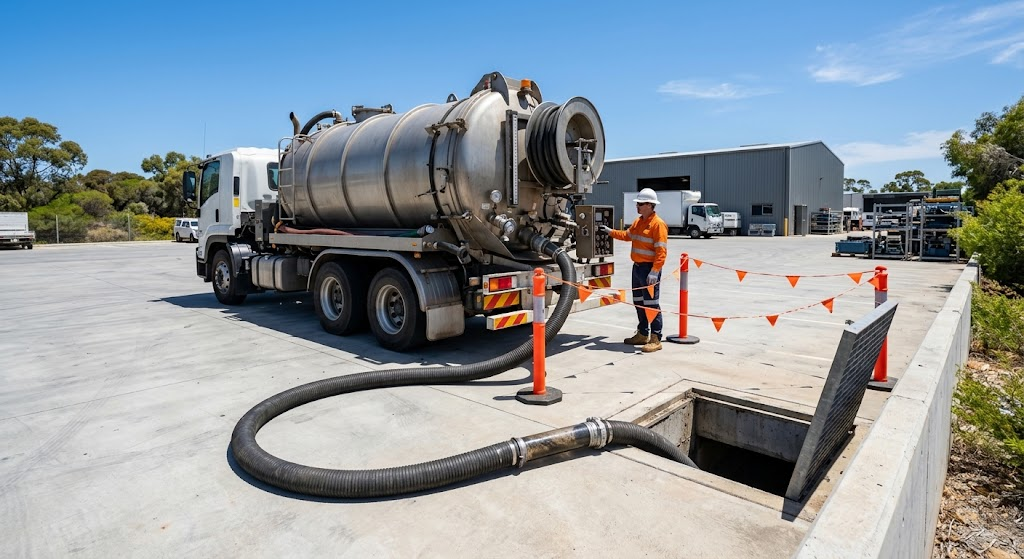
Ask around a Perth work site and you will hear the same machine called a few different names: sucker truck, vacuum truck, vac truck, vacuum tanker. They all describe the same thing, a truck with a powerful suction system and a sealed tank that pulls liquids, sludge and loose material out of places that are hard, messy or unsafe to clear by hand.
If you manage a commercial, industrial, civil or mining site, there is a good chance you will need a sucker truck at some point.
This guide covers what these trucks do, what they can and cannot remove, and what to check before you book one, so you get the right job done properly the first time.
What Is a Sucker Truck?
A sucker truck is a vacuum tanker. A large pump or blower creates suction, a hose draws material from the source, and the waste is held in a sealed tank on the truck until it can be transported to a facility that is licensed to receive it.
Some trucks also carry a pressure water system, which lets the operator break up compacted sludge or silt before it is drawn away.
The name is colloquial, and you will see providers use “vacuum truck” or “vacuum tanker” on their websites, but the job is the same. Whichever term you use, the value is that the work is done by suction, from a safe distance, without anyone climbing into a pit or lifting heavy buckets of waste.
What Can a Sucker Truck Remove?
These trucks handle a wide range of liquids, sludges and loose solids, which is why they turn up across so many industries.
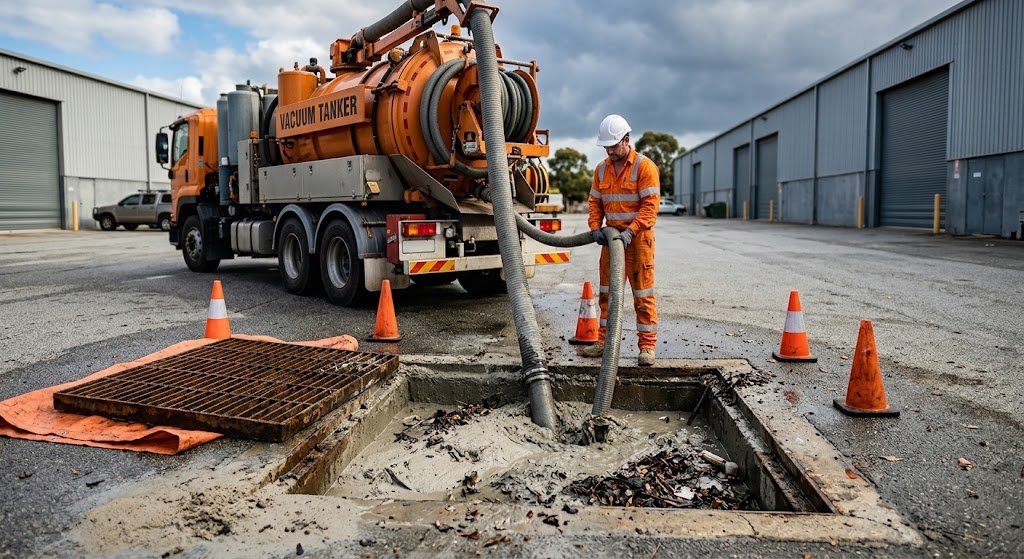
On commercial and industrial sites, the most common jobs include clearing blocked or silted stormwater pits and pipes, emptying sumps, removing sludge from wash bay and mud pits, and cleaning out settling basins.
On construction and civil projects, they remove slurry and spoil, and clear drainage during and after earthworks. On mining sites they process water, drill spoil and sump sludge. They are also used to remove spent abrasive blasting media, such as garnet, from blasting enclosures.
| Job | What it removes | Typical site |
|---|---|---|
| Stormwater pit and drain cleaning | Silt, sand, leaf litter, water | Car parks, hardstands, depots |
| Car wash and mud pit cleaning | Sludge, sediment, wash water | Wash bays, mining and civil sites |
| Sump and settling basin cleaning | Sludge and process water | Industrial plants, mine sites |
| Garnet waste removal | Spent blasting media, wet or dry | Blasting yards and enclosures |
| Emergency flood response | Standing water after heavy rain | Any flooded commercial site |
| Slurry and spoil removal | Wet or dry spoil from digging | Civil and construction projects |
When Do You Need a Sucker Truck?
Most sites book a truck for one of two reasons: a routine clean that keeps a system working, or a problem that has already shown up.
Routine cleaning is the cheaper and less stressful path. Stormwater pits fill with sand and sediment over time, wash bay pits build up sludge, and sumps slowly lose capacity. Clearing them on a schedule, ideally before the wetter months in Perth, keeps drainage working and stops small build-ups becoming a flood.
Reactive call-outs are what you do when something has gone wrong. Water ponding in a car park after rain, a pit overflowing, a wash bay backing up, or a sump too full to pump are all signs it is time to book. In an emergency, such as flooding after a heavy downpour, speed matters, so it helps to know who you will call before you need them.
Which Waste Can and Cannot Go in the Tank?
This is where a lot of site managers get caught out. The truck can physically draw up almost anything, but that does not mean everything can legally be dealt with the same way once it is in the tank.
Waste is classified by what it is and where it came from. Some liquid and sludge is straightforward to dispose of, while other material, such as contaminated wash water or sludge carrying hydrocarbons or chemicals, needs to go to a facility licensed to accept it.
In Western Australia, certain wastes are classed as controlled waste, and the Government of Western Australia sets out the controlled waste requirements for anyone transporting them, including licensing and tracking from the point of generation to a lawful disposal facility.
The same thinking applies to the sewer. Not all wastewater from a business can be discharged to it, and the Water Corporation requires a permit before any trade waste is discharged, including wastewater from vehicle or plant servicing. If you are unsure what your site’s waste is classed as, ask before the truck arrives, not after.
What to Check Before You Book a Sucker Truck Provider
Not every provider is the same, and a few quick questions will tell you a lot.
Do They Understand Your Waste Stream?
Tell the provider what you need removed and where it came from. A good operator will ask follow-up questions about contamination, volume and access, because the answers decide the truck, the equipment and the disposal pathway.
Can They Handle the Volume and the Access?
Tank capacity matters. A small truck on a large job means multiple trips and a longer day. Access matters too, since hose length, overhead clearance and ground conditions all affect what is practical on a tight or remote site.
Where Does the Waste Go?
Ask where the waste is taken and whether the provider can supply records of what was collected. If the waste is a controlled waste, ask whether the provider holds the licensing required to transport it. A reputable operator will answer plainly.
Do They Meet Your Site Requirements?
Many commercial, industrial and mining sites require inductions, safety documentation and specific equipment standards before a contractor can start. Raise this early so the job is not delayed on the day.
Can They Respond When It Matters?
If your site is prone to flooding or relies on a wash bay running daily, response time is part of the service. Ask what their emergency availability looks like.
How a Sucker Truck Job Works
A well-run job follows a simple sequence.
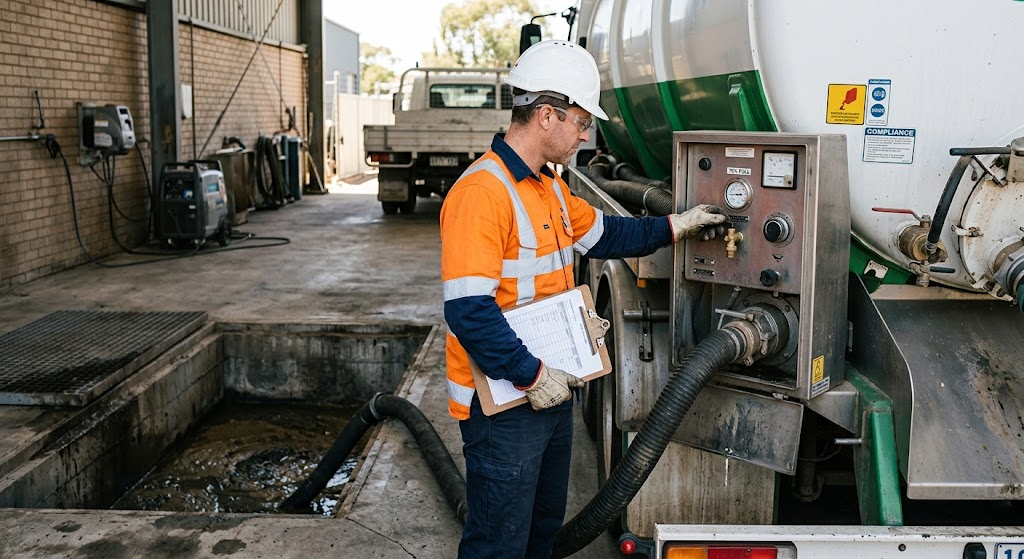
First, we confirm what is being removed, where it is, and what access the truck has. Next, the operator positions the truck, sets up the hose and, where needed, uses water to break up compacted material.
The waste is drawn into the sealed tank, keeping it contained from the moment it leaves the pit or drain. Once the area is clear, we check that it is properly cleaned, and the waste is transported to an appropriate disposal facility. Finally, you receive a record of what was collected, which is useful for site compliance and audits.
Why Sucker Trucks Suit Perth Sites
Perth’s conditions make this work a regular need. Sandy soils wash fine sediment into stormwater pits and pipes with every heavy rain, and a lot of the year’s rainfall arrives in intense winter downpours, so a partly blocked system can be overwhelmed quickly.
Industrial areas across the metropolitan region, along with the state’s mining sites, also generate steady volumes of wash water, sludge and spoil that need dependable removal.
Why Choose iVac WA
When you book a sucker truck, you want the right equipment, a clear process and a provider who turns up when they say they will. Here is what we bring to every job:
- We operate the largest and most advanced vacuum truck fleet in Western Australia, so we have the capacity for routine cleans and larger jobs.
- We clean stormwater drains, pits and soakwells, car wash and mud pits, and remove garnet waste, wet or dry.
- We provide emergency flood response when heavy rain overwhelms a site.
- We work to your site’s induction, access and safety requirements as standard.
- We support Western Australia’s commercial, industrial, civil and mining sectors, with a focus on safe work and a fast turnaround.
| Need a sucker truck on your site in Perth? Call iVac WA on (08) 6205 9986 or email info@ivacwa.com.au for a free estimate. |
Frequently Asked Questions
What is a sucker truck?
A sucker truck is another name for a vacuum truck or vacuum tanker. It uses powerful suction to draw liquids, sludge and loose material into a sealed tank, so waste can be removed from pits, drains, sumps and excavations without manual handling.
What is the difference between a sucker truck and a vacuum truck?
There is no practical difference. It is the more informal term, and vacuum truck or vacuum tanker is how most providers describe the same equipment.
What can a sucker truck remove?
Water, silt, sludge, slurry, spoil and spent blasting media such as garnet, among other materials. What can then be done with that material depends on what it is and where it came from, which is why the waste type should be confirmed before the job.
Can a sucker truck clear a blocked stormwater drain?
Yes. These trucks, often combined with high-pressure jetting, remove the silt, sand and debris that block stormwater pits and pipes, restoring capacity without excavation.
How often should pits and sumps be cleaned?
It depends on the site, but most commercial and industrial stormwater pits benefit from at least an annual clean, ideally before the wetter months. Wash bay pits and sumps in heavy use may need more frequent attention.
Do you provide emergency sucker truck services in Perth?
Yes. We respond to urgent call-outs, including emergency flood response, when heavy rain overwhelms a site.
Do you service homes?
Our work is focused on commercial, industrial, civil and mining sites across Western Australia.
Conclusion
A sucker truck is one of the most practical tools a commercial or industrial site can call on, whether the job is a routine pit clean, a clogged wash bay or an urgent flood. The best results come from telling your provider exactly what needs removing, confirming how it will be handled and disposed of, and booking before a small build-up becomes a big problem.
| To arrange a sucker truck service in Perth, call iVac WA on (08) 6205 9986 or email info@ivacwa.com.au. |