
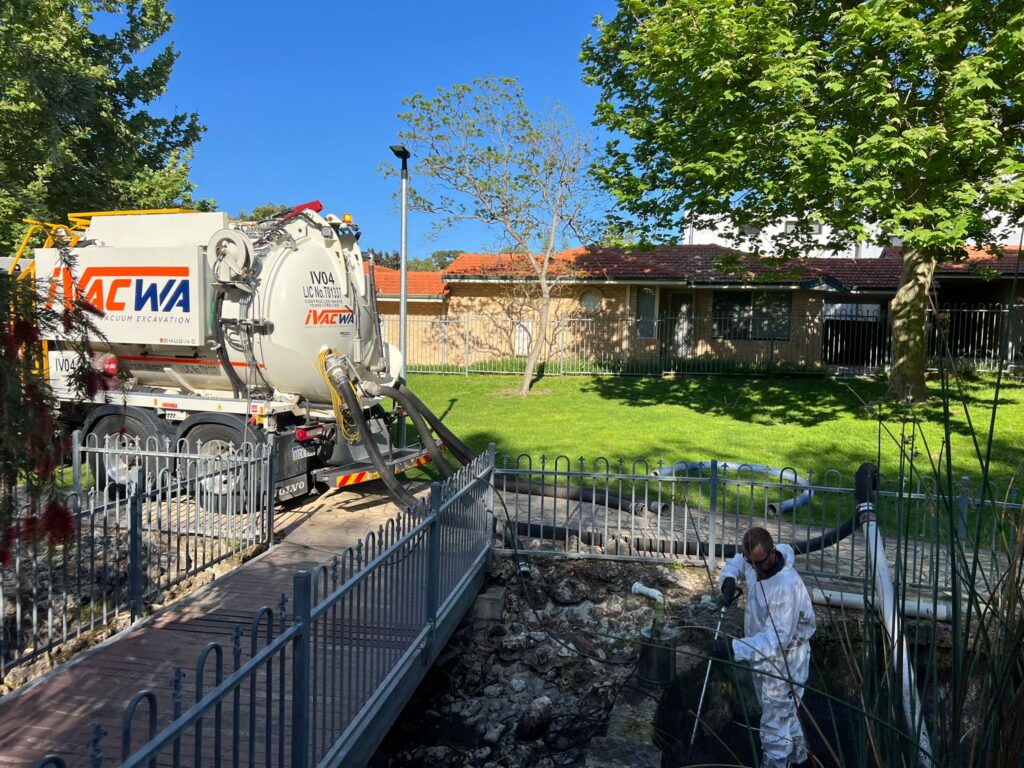
Stormwater drains do a quiet but critical job. They carry rainwater and runoff away from car parks, roads, hardstands and buildings, and channel it to soakwells or the wider drainage network. When they block, that water has nowhere to go, and in Perth’s heavy winter downpours the result can be rapid flooding, property damage and disrupted operations.
The trouble is that a stormwater blockage usually builds up out of sight, so the first sign is often water pooling where it should not. Understanding what causes these blockages, spotting them early, and knowing how they are properly cleared can save a site a great deal of damage and downtime.
Here is a practical guide to blocked stormwater drains in Perth, the common causes, the warning signs, and the fixes that actually work.
How Stormwater Drains Work
Stormwater drains are entirely separate from the sewer system. Rather than carrying wastewater to treatment, they collect rainwater from surfaces and direct it, untreated, into soakwells, drainage networks and ultimately local waterways. The Water Corporation, which manages much of the metropolitan drainage network, designs these systems to move large volumes of water quickly during rain.
Because the water is not treated, only rainwater should ever enter a stormwater drain. That is why keeping them clear, and keeping pollutants out, matters for both drainage and the environment.
Common Causes of Blocked Stormwater Drains in Perth
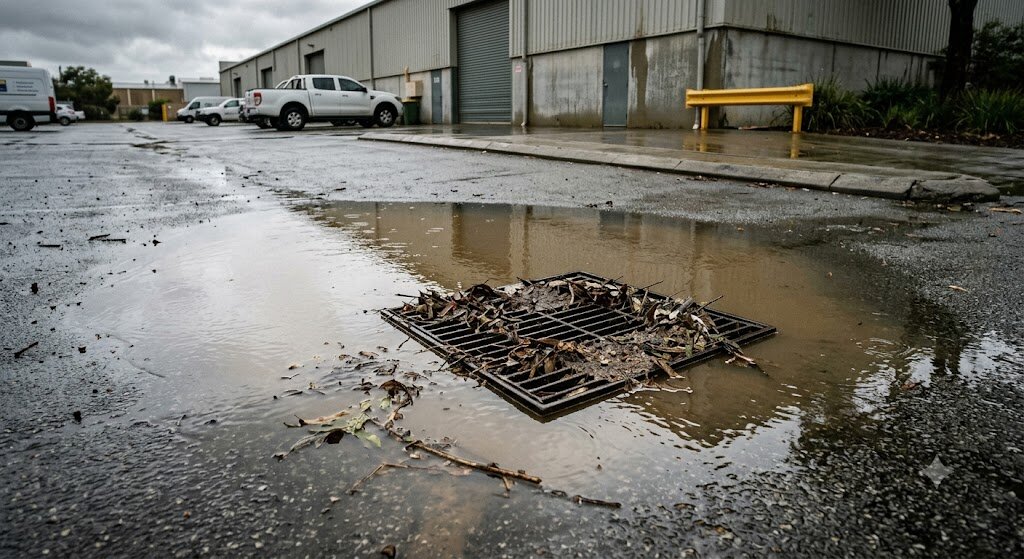
Several things clog stormwater systems, and in Perth some are more common than others.
The biggest culprit is sand and silt. Perth sits on the sandy soils of the Swan Coastal Plain, and the Department of Primary Industries and Regional Development notes that the region’s pale sandy soils are loose and free-draining, so fine sand washes into stormwater pits and pipes with every rain and settles at the bottom. Over time it builds into a layer that chokes the flow.
Leaf litter and organic debris are another major cause, blocking grates and filling pits, especially where there is landscaping or established trees nearby. Sediment and soil from construction, earthworks and landscaping runoff wash in and settle just like sand. Litter and rubbish collect at grates and inlets.
Tree roots chase moisture into stormwater pipes and grow until they choke the line. And on commercial and industrial sites, sediment from car parks, wash bays and hardstands adds to the load.
Underlying all of this, a stormwater system can also block because a pipe has cracked, collapsed or sagged, or because a soakwell has filled with sediment and stopped draining.
These are the problems that keep coming back until they are properly diagnosed and fixed.
Signs of a Blocked Stormwater Drain
A blocked stormwater drain usually gives clear warning before it causes serious flooding. Watch for these signs on a site:
- Water pooling or ponding on surfaces that should drain freely
- Drains and pits that are slow to clear after rain
- Water overflowing from stormwater pits or gullies
- Localised flooding in car parks, yards or low-lying areas
- Gurgling sounds or a bad smell around the drains
- Erosion or damp patches near where water is escaping
Any of these means the system is not coping, and it is far better to act before the next heavy rain than to deal with a flood.
Why It Matters in Perth
Perth’s climate makes stormwater maintenance particularly important. Much of the year’s rain falls in intense winter downpours, so a system that is even partly blocked can be quickly overwhelmed.
The Department of Water and Environmental Regulation’s Stormwater management manual for Western Australia sets out the state’s approach to managing stormwater quantity, quality and flooding, and keeping systems clear and functioning is central to it. Many properties also rely on soakwells to dispose of stormwater on site, and when those soakwells fill with sand and sediment, they stop working and water backs up across the surface.
There is an environmental dimension too. Because stormwater flows untreated into waterways, allowing pollutants, sediment or contaminated water into the system is a problem, and in Western Australia it is an offence, as the state’s Environment Watch guidance makes clear.
Keeping stormwater drains clear, and capturing any waste rather than flushing it downstream, protects both the site and the environment.
How to Fix a Blocked Stormwater Drain
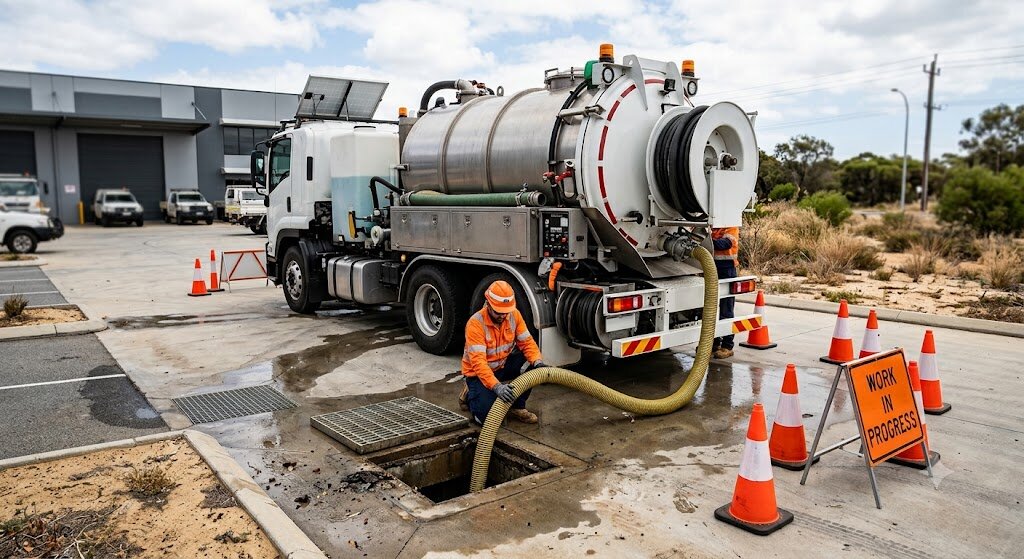
The right fix depends on the cause, which is why the first step is always to find out what is actually going on.
For a minor surface blockage, clearing leaf litter and debris from the grate can restore flow. But when the blockage is further down, in the pits, pipes or soakwells, it needs professional equipment to clear it properly.
The most effective solution is jet/vac cleaning. High-pressure water jetting breaks up the silt, sand, roots and debris inside the pipe or pit, while a powerful vacuum draws the loosened material and water out of the system entirely.
This restores the drain to full capacity rather than just clearing a narrow channel, and because the waste is captured in the truck rather than flushed downstream, it does not simply cause the next blockage.
For soakwells, the fix is vacuum cleaning to remove the accumulated sand and sediment and restore their capacity. Where a blockage keeps returning, a CCTV inspection identifies the underlying cause, such as a collapsed pipe or root intrusion, so it can be repaired rather than repeatedly cleared.
And when heavy rain has already caused flooding, emergency flood response pumps and vacuums the water away to protect the site.
The best fix of all is prevention. Clearing stormwater drains and soakwells once a year, ideally before winter, keeps a system ready for the rain and avoids the cost and disruption of a flood.
Causes and Fixes at a Glance
| Cause | Why it happens | The fix |
| Sand and silt | Washes in from Perth’s sandy soils | Jet/vac cleaning of pits and pipes |
| Leaf litter and debris | Trees and landscaping near the drains | Clear the grates, then jet/vac the pits |
| Sediment and soil | Construction and landscaping runoff | Vacuum removal and jetting |
| Tree roots | Roots invade stormwater pipes | Jetting with a cutting nozzle, then repair if cracked |
| Full or failed soakwells | Sediment fills the soakwell | Vacuum cleaning to restore capacity |
| Collapsed or damaged pipe | Ageing pipes or ground movement | CCTV inspection, then a targeted repair |
Why Choose iVac WA
When a stormwater drain blocks, the right equipment clears it properly and keeps it clear. Here is what we bring to every job:
- We are Perth’s leading vacuum excavation and drainage specialists, operating the largest and most advanced vacuum truck fleet in Western Australia.
- We clear blocked stormwater drains, pits and soakwells with high-pressure jetting and vacuum recovery, restoring them to full capacity.
- We capture and remove the silt, sediment and water responsibly, rather than letting it run downstream into the environment.
- We provide emergency flood response when heavy rain overwhelms a site, and CCTV inspection to find the cause of recurring blockages.
- We support Western Australia’s commercial, industrial, civil and mining sectors, with a focus on safe work and a fast turnaround.
Because we run jetting and vacuum recovery together, we clear the drain and take the waste away in a single visit.
|
Dealing with a blocked stormwater drain or flooding? Call iVac WA on (08) 6205 9986 or email info@ivacwa.com.au for fast stormwater drain cleaning across Perth. |
Frequently Asked Questions
What causes stormwater drains to block in Perth?
The most common causes are sand and silt washing in from Perth’s sandy soils, along with leaf litter, sediment from construction and landscaping, litter, and tree roots. A stormwater drain can also block because a pipe has collapsed or a soakwell has filled with sediment and stopped draining.
How do I know if my stormwater drain is blocked?
The clearest sign is water pooling on surfaces that should drain freely, or pits that are slow to clear after rain. Overflowing pits, localised flooding, gurgling and bad smells are all signs the system is not coping.
Can a blocked stormwater drain be cleared without digging?
Yes. Jet/vac cleaning clears the blockage from inside the pipe or pit using high-pressure water and vacuum recovery, with no excavation needed. If a camera inspection reveals a collapsed pipe, a targeted repair may be required, but the cleaning itself is non-destructive.
Should soakwells be cleaned too?
Yes. Soakwells fill with sand and sediment over time, which stops them draining and causes water to back up across the surface. Vacuum cleaning removes the sediment and restores their capacity, ideally once a year before winter.
How often should stormwater drains be cleaned?
Once a year is a sensible guide for most sites, ideally before the winter rain arrives. Sites with heavy leaf fall, sandy surrounds or a history of blockages may benefit from more frequent cleaning.
Do you provide emergency flood response in Perth?
Yes. We provide fast call-outs across Perth and wider Western Australia, including emergency flood response to pump and vacuum water away when heavy rain overwhelms a site.
Conclusion
A blocked stormwater drain is one of those problems that stays hidden until the rain arrives, and then it becomes urgent all at once. In Perth, where winter downpours are intense and many sites rely on soakwells, keeping stormwater systems clear is essential to avoiding flooding and damage.
Sand, silt, leaves and roots are the usual causes, and jet/vac cleaning is the fix that clears them properly and keeps the waste out of the environment.
Watch for pooling water and slow-clearing pits, deal with blockages early, and clear your stormwater drains and soakwells before winter rather than after the flood.
|
To book stormwater drain cleaning or arrange emergency flood response in Perth, call iVac WA on (08) 6205 9986 or email info@ivacwa.com.au. |