For any business or site, a blocked drain is more than an inconvenience. It can mean closed doors, a failed health inspection, wastewater across a work floor, and operations grinding to a halt while the mess is cleaned up.
The good news is that most of that risk is avoidable. Regular jet cleaning keeps drains clear before a blockage ever forms.
So how often should the drains at a Perth commercial, industrial or civil property actually be jet cleaned? There is no single answer that suits every site, because it depends on the type of property, the age of the pipes, and what goes down the drains. But there are clear guidelines, and this article walks through them, along with the signs that tell you not to wait.
What Is Drain Jet Cleaning?
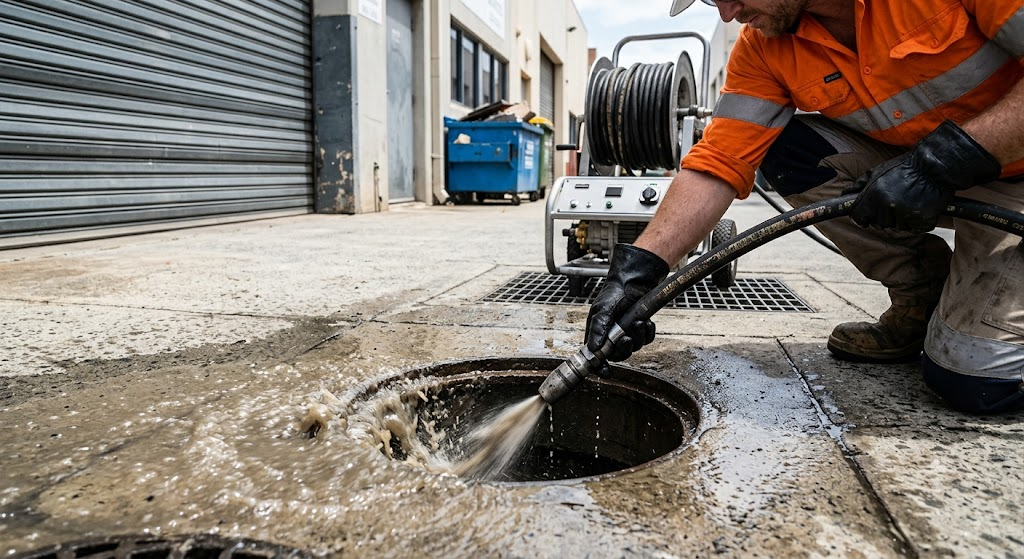
Drain jetting, also called hydro jetting, uses a high-pressure stream of water to clean the inside of a pipe. A hose with a specialised nozzle is fed into the drain, and water is delivered at high pressure to cut through grease, slice out tree roots, and flush away the silt, sand and debris that build up over time.
Unlike a plunger or a chemical cleaner, which only deal with the immediate clog, jetting scours the whole pipe back to its full diameter, so the flow is properly restored.
Used as planned maintenance rather than an emergency fix, it is one of the simplest ways to keep a site’s drainage reliable.
How Often Should Commercial Drains Be Jet Cleaned?
As a general guide, most commercial premises benefit from a preventative jet clean at least once a year, while high-demand sites such as food premises need it far more often. The right interval depends on how quickly a particular property builds up grease, sediment or waste.
The table below sets out a sensible starting point for different property types.
| Property or system | Suggested frequency | Why |
| Commercial kitchens and food premises | Every 3 months | Fats, oils and grease build up fast in food-service lines |
| Retail, offices and shopping centres | Every 12 months | Clears routine buildup before it disrupts trade |
| Industrial sites and process drains | Every 6 to 12 months | Process waste, sediment and sludge accumulate quickly |
| Car parks, wash bays and mud pits | Every 6 to 12 months | Sand, silt and sediment reduce drainage capacity |
| Stormwater drains and soakwells | Once a year, before winter | Restores capacity ahead of Perth’s heavy winter rain |
These are starting points, not fixed rules. The best way to set the right schedule for a site is to have the drains inspected with a camera, with any defects graded to the national WSA 05 Conduit Inspection Reporting Code. This shows their real condition and how quickly they tend to build up.
What Affects How Often You Need It?
Several factors push a property towards the more frequent end of the scale.
The first is what goes down the drains. Fats, oils and grease from commercial kitchens are a leading cause of blockages, hardening inside the pipe and trapping everything that follows. Wash bays, workshops and industrial processes send sand, sludge and sediment into the lines.
The Water Corporation, which runs much of the metropolitan network, urges customers to keep grease and non-flushable items such as wet wipes out of the drain, since neither breaks down the way it should and both are common culprits in wastewater blockages.
The age and material of the pipes matter too. Many older commercial and industrial sites still have clay or earthenware drainage, which is more prone to cracking, root intrusion and rough internal surfaces that catch debris. Trees are another factor.
Perth’s sandy soils drain quickly, so tree roots seek out the moisture inside pipes and force their way in through the smallest crack or joint, which is a common problem on established sites with landscaping.
Finally, usage intensity counts. A busy restaurant, a high-traffic car park or a round-the-clock industrial site will all build up faster and need more frequent cleaning than a quiet office.
Signs You Should Not Wait for the Schedule
Regular jetting is about prevention, but the drains will also tell you when they need attention sooner. Book a clean if you notice any of these on site:
- Water draining slowly across several fixtures, not just one
- Gurgling sounds from drains, floor wastes or toilets
- A persistent bad or sewage-like smell affecting staff or customers
- Drains that block again soon after being cleared
- Wastewater backing up through a floor drain or gully when another fixture is used
Any of these suggests buildup is already narrowing the pipe, and dealing with it early is far cheaper and less disruptive than a full blockage during trading hours.
The Benefits of Sticking to a Schedule
Treating jetting as routine maintenance rather than an emergency call-out pays off across a business.
It prevents blockages before they happen, which avoids the downtime, closures and clean-up costs of a backed-up drain. It supports compliance, which matters for food premises and any site with health, safety or environmental obligations.
It protects the pipes, since removing grease, roots and sediment reduces the strain that leads to cracks and collapses. It saves money over time, because a planned clean is far cheaper than an emergency call-out and the damage an overflow can cause.
And for stormwater drains and soakwells, an annual clean before winter helps a site cope with heavy rain rather than flooding.
Why Choose iVac WA
When it is time to clean a site’s drains, the right equipment and experience make all the difference. Here is what we bring to every job:
- We are Perth’s leading vacuum excavation and drainage specialists, operating the largest and most advanced vacuum truck fleet in Western Australia.
- We use high-pressure jetting to clear grease, roots, silt and debris, restoring drains to full flow.
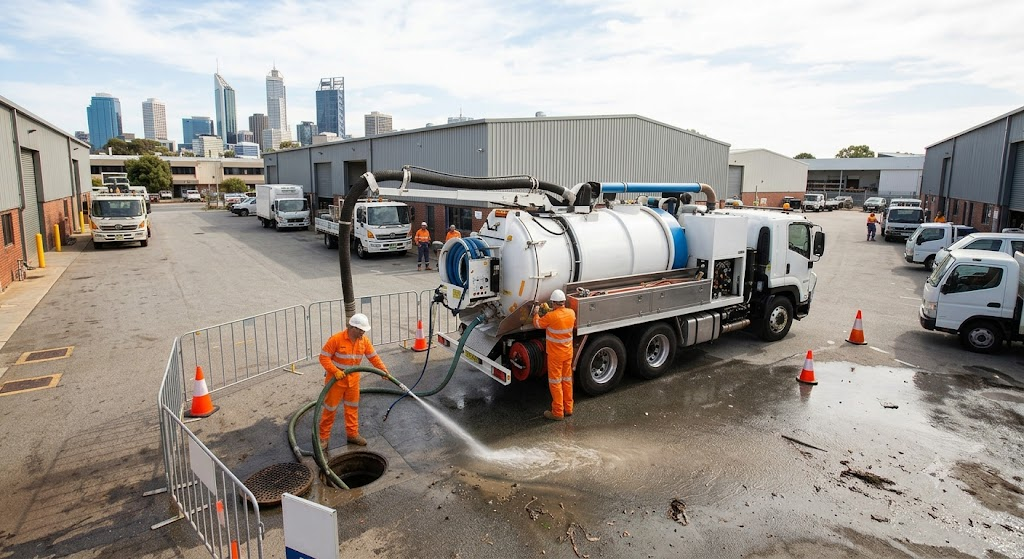
- We capture and remove the waste with our vacuum trucks and dispose of it responsibly, rather than letting it run into the stormwater system.
- We clean stormwater drains and soakwells as well as sewer and process lines, and provide emergency flood response when the rain overwhelms a site.
- We support Western Australia’s commercial, industrial, civil and mining sectors, with a focus on safe work and a fast turnaround.
Because we run jetting and vacuum recovery together, we clear the drain and take the waste away in a single visit.
| Not sure when your site’s drains were last cleaned? Call iVac WA on (08) 6205 9986 or email info@ivacwa.com.au to book a jet clean for your Perth business or site. |
Frequently Asked Questions
How often should commercial drains be jet cleaned in Perth?
As a general guide, at least once a year for most commercial premises, and every three months for food premises where grease builds up quickly. Industrial sites, car parks and wash bays often need cleaning every 6 to 12 months, and stormwater drains and soakwells are best cleared once a year before winter.
Does jetting damage pipes?
For sound pipes, no, when the pressure is matched to the pipe by a trained operator. We inspect the line with a camera first to confirm it is structurally sound before jetting, which also identifies any pipe that needs assessment rather than cleaning.
Is regular jetting really necessary if the drains seem fine?
Preventative jetting stops blockages before they start, which is cheaper and far less disruptive than an emergency during trading hours. Buildup happens gradually and silently, so a drain can look fine right up until it blocks. Regular cleaning keeps a site ahead of it.
How do I know if a site’s drains need cleaning sooner?
Watch for slow drainage across several fixtures, gurgling, bad smells, or blockages that keep returning. Any of these means buildup is already narrowing the pipe, and it is worth booking a clean before it becomes a full blockage.
Should stormwater drains and soakwells be jetted too?
Yes. Soakwells and stormwater drains fill with sand, silt and leaf litter over time, which reduces their capacity. Clearing them once a year, ideally before winter, helps a site handle Perth’s heavy rain and reduces the risk of flooding.
Do you offer emergency drain cleaning in Perth?
Yes. We provide fast call-outs across Perth and wider Western Australia, including emergency flood response and urgent blockages that cannot wait.
Conclusion
The simplest way to avoid a blocked drain is to clean the pipe before it ever gets the chance to block. For most Perth commercial sites, an annual jet clean does the job, with quarterly cleaning for food premises, more frequent attention for industrial sites, car parks and wash bays, and a yearly clear of stormwater drains and soakwells before winter.
Watch for the warning signs, and do not wait for the schedule if the drains are already struggling.
A little planned maintenance keeps a site’s drainage flowing, protects the pipes, and saves you from the downtime and cost of an emergency.
| To book a jet clean or a drain inspection for your Perth business or site, call iVac WA on (08) 6205 9986 or email info@ivacwa.com.au. |